

Blokecore to Sprezzatura: Menswear's Internet Fashion Trends Explained
Somewhere in this office, a member of the editorial team has been quietly collecting fashion words off the internet. The plan was simple. Hand Chris Modoo the list cold, no notes, no rehearsal, and see how many survive contact with a man who has spent three decades dressing other men properly. Fifteen trends later, the results are in, and several of them did not go quietly..
Enter our prize draw for four style guides and £500 to spend
Shop the Video
 Navy & Burnt-Orange Floral Grenadine Tie
£195 (sold out)
Navy & Burnt-Orange Floral Grenadine Tie
£195 (sold out)
 The Fighting Temeraire Pocket Square
£90
The Fighting Temeraire Pocket Square
£90
 Dark-Grey Wool Flannel Jacket
£1,445
Dark-Grey Wool Flannel Jacket
£1,445
 Grey Shantung Silk Tie
£155
Grey Shantung Silk Tie
£155
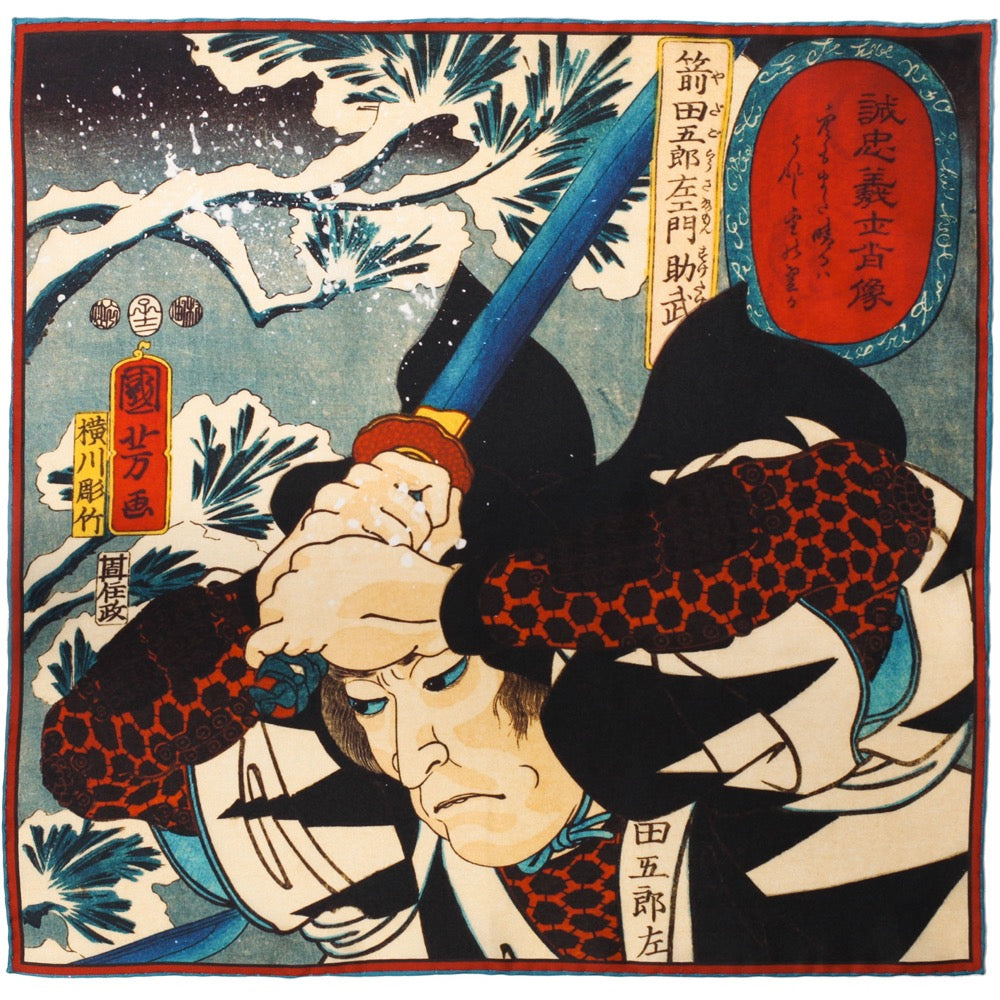 Portrait of Yada Gorosaemon Suketake Pocket Square
£90
Portrait of Yada Gorosaemon Suketake Pocket Square
£90
 Chestnut-Brown Hopsack Wool Blend Jacket
£1,445
Chestnut-Brown Hopsack Wool Blend Jacket
£1,445
 Blue Stripe Grenadine Tie
£195
Blue Stripe Grenadine Tie
£195
 Thonon-les-Bains Pocket Square
£90
Thonon-les-Bains Pocket Square
£90
For more styling tutorials, subscribe to our channel
Subscribe to Our ChannelA note on the format
What Do "Core" Trends Actually Mean in Menswear?
Add "core" to the end of almost any noun and the internet will nod along as though you have said something. Blokecore, gorpcore, goblincore: each one names a small, recognisable set of signals, a jacket here, a colour there, a shoe doing most of the talking, rather than anything so grand as a movement. The habit began in 2013, when a trend forecasting group coined "normcore" and, in doing so, handed the internet a naming convention it has never once put down.
Chris received the full list with no preparation whatsoever, which is the only honest way to test a definition: does it describe clothes you already understand, dressed up in new language, or does it describe something you have never seen. Filming this one, he kept to a single outfit throughout, a navy grenadine tie scattered with burnt orange florals, worn against The Fighting Temeraire pocket square, Turner's doomed warship rendered rather beautifully in silk.
The terrace look
What Is Blokecore, and When Does It Actually Work?
Blokecore takes its cue from the football terraces: replica kits, Adidas track tops, trainers that have seen a stadium concourse or two, worn as identity rather than as sportswear. It arrived online closer to a joke than a genuine proposal and has since been adopted with wildly varying sincerity, helped along considerably by an Oasis revival that put the whole 1990s wardrobe back within reach of people who were not alive to buy it the first time.
Chris's verdict rests entirely on the wearer. A man reprising the exact outfit he wore at twenty five, unaltered twenty years on, is not reviving a trend so much as declining to notice one had ended. A teenager doing the same thing with a decade he never lived through is doing something closer to research. The more durable version of this instinct has been quietly at work for a century regardless: a blazer worn with trainers, a rugby shirt tucked under a hacking jacket. It does the same job without an expiry date attached.
Trail mix in the city
What Is Gorpcore, and Does Outdoor Gear Belong in Town?
Gorpcore, named for the hiker's trail mix of raisins and peanuts, describes technical outdoor clothing marched into a city that has never troubled a mountain in its life. Chris identifies two distinct camps here, and declines to be rude about either. There is the genuine outdoor enthusiast, for whom weekend gear becomes weekday clothing partly out of comfort and partly so fellow mountaineers can spot one another across a crowded pavement. And there is the committed urbanite who has adopted the aesthetic of a specialist brand without any of the specialism attached. Both, he points out, are perfectly defensible, and neither is remotely new.
Almost the entire British wardrobe considered classic today began its life outdoors. Blazers, hacking jackets and covert coats were all built for the field long before anyone wore one to a desk, so gorpcore is less a discovery than a late arrival to a party that has been running for over a century. Chris also mounts a surprisingly practical defence: London commuting is a more athletic undertaking than the Tube map admits, the weather changes its mind constantly, and clothing designed for movement earns its keep on an hour spent underground. Where the whole argument comes slightly unstuck is at the extreme end, a pair of mountaineering boots on Oxford Street looking less like preparedness and more like a filing error.
Studied plainness
What Is Normcore, and How Do You Wear It Without Looking Try-Hard?
Normcore means dressing deliberately unremarkably, button-downs, V-neck sweaters, chinos, with the crucial understanding that the plainness itself is the point rather than an absence of one. It leans heavily on Japanese and Scandinavian minimalism, and done properly it reads as quiet self-possession rather than a man who simply gave up at the wardrobe.
The tell, as Chris notes with some relish, is that almost nobody commits to it entirely. Full normcore nearly always carries one small, deliberate signal against the plainness, oversized glasses, an unexpectedly interesting watch, proof that the restraint is a decision rather than an accident. Others go the opposite way and let heavy tattooing do the contrasting for them, so the tension itself becomes the outfit. A man in unbroken normcore, front to back, with nothing at all working against it, is a rarer sighting than the trend's own popularity would suggest.
Here is grey-on-grey dressing that has clearly thought about the matter rather than simply arrived at it. The flannel carries enough weight and brush to avoid the flatness that undoes lesser attempts, and the shantung tie's slubbed texture keeps the whole arrangement from reading as a single, discouraging surface. True normcore leans on high-street basics, but the underlying logic, restraint as a decision rather than a default setting, survives the move into finer cloth remarkably well.
The romantic student
What Is Poetcore, and Where Does the Look Come From?
Poetcore does brisk business on Pinterest as a methodical, romantic silhouette: loose knitwear, a messenger bag, the general bearing of an eighteenth-century Romantic poet rather than a Regency buck. Chris places it, with some accuracy, as a close cousin of the 1980s student who admired The Smiths and Morrissey with a devotion that occasionally alarmed his parents, drawn to melancholy without quite committing to full goth.
It belongs, in truth, to a much older tradition of undergraduate and bohemian dress, unstructured jackets, wool scarves, corduroy, that has been quietly recurring in Britain since long before Pinterest gave it a mood board. It is also, happily, one of the easier trends on this list to absorb into an existing wardrobe, requiring softer shapes and a looser scarf rather than a single new purchase.
Fatigues off duty
What Is Warcore, and How Does Military Clothing Work in Tailoring?
Warcore describes tactical, militaristic clothing repurposed as streetwear, cargo pockets, utility straps, a generally dystopian air about the whole enterprise. It caught Chris rather off guard. He had pictured something closer to a libertine reinterpreting a guards uniform. What he got instead was closer to a Vietnam-issue field jacket doing weekday duty on the high street, a considerably less romantic proposition.
Military surplus has a genuine and rather dignified history in British menswear. Army surplus shops kept a generation practically dressed after the Second World War, and the Mods famously wore parka coats specifically to protect their mohair suits while riding scooters, which is possibly the most sensible reason anyone has ever had for wearing a parka. In tailoring circles today, a field jacket or covert coat worn over proper trousers still reads as thoughtful. Full tactical kit, cargo pockets and all, remains a considerably more niche proposition, and one Chris has yet to encounter in the wild.
Mushrooms and moss
What Is Goblincore, and Is It a Menswear Trend at All?
Goblincore is an earthy, chaotic aesthetic organised loosely around collecting: mossy greens, mushrooms, whatever interesting object the woodland floor happens to be offering that week. Chris's verdict, delivered without unkindness, is that it is very niche, an offshoot of the hippie movement that has wandered further into the undergrowth than most of its relatives. It earns its place on the list because the internet keeps asking, not because it troubles menswear in any serious way.
Inherited, not bought
What Does the "Old Money Aesthetic" Actually Mean?
Online, old money usually arrives in its American accent: navy blazers, boat shoes, a Nantucket postcode implied rather than confirmed. Chris's British reading is older and considerably more literal. Old money means wearing inherited or aged clothing rather than new, a grandfather's morning coat rather than a fresh one, a father's ties rather than a fresh trip to buy them. The prestige, historically, was never in the item itself. It was in never having needed to replace it.
We take the British and American readings apart properly in our full guide to the old money aesthetic, including the considerable ground where the two actually part company.
Wealth that doesn't announce itself
What Is Quiet Luxury, and How Does It Differ From Old Money?
Quiet luxury means expensive clothing with no logo attached, the finest cloth, no branding, wealth conducted entirely through cut and hand rather than a monogram. Chris makes a sharp point about the commercial mechanics underneath it. Once a luxury house has sold restraint for a season or two, the logos tend to return louder than before, since the brand needs a fresh reason for the same customer to buy again. He avoids logo clothing as a rule and prefers fabric that looks modest while feeling unmistakably expensive to the hand, though he is honest enough to admit that some quiet luxury pricing has, in practice, become rather loudly quiet.
For the fuller argument, see our quiet luxury dressing guide.
Linen, loafers, weathered ease
What Is Coastal Grandfather Style, and How Do You Wear It Without a Yacht?
Coastal grandfather means linen, loafers, neutral tones and what one description rather grandly calls a relaxed authority, an entire lifestyle folded into two words. Chris reaches, not unreasonably, for the sort of unhurried elegance a certain doomed character in The Talented Mr Ripley never lived long enough to properly grow into: weathered at the edges, healthy, entirely at ease in his own linen. It is a properly persuasive look when the life around it matches the clothes. Worn to the corner shop on a wet Saturday with none of that context present, it reads considerably more like a costume than a character.
This is the version of coastal ease worth recommending without reservation. The hopsack weave has enough texture to look settled into rather than freshly bought, and a grenadine tie's raised, honeycombed surface performs the same trick a well-worn linen jacket performs on holiday: it suggests a history the wearer has not had to invent. Browse the rest of the tailored jackets collection for the same effect worked through in other cloths.
Skinny jeans, low light
What Is Indie Sleaze, and Is It Really Coming Back?
Indie sleaze describes an early 2010s low-fidelity aesthetic, skinny jeans, leather jackets, the specifically unflattering flash photography of that era's nightlife. Chris's relief at the prospect of skinny jeans not fully returning was audible and entirely unfeigned, after roughly a decade of them he is, in his own words, asking for a bit of breathing space. It sits more happily as a night-out proposition tied to a very specific moment than as anything resembling daywear, and a brief resurgence online is not quite the same undertaking as an actual comeback.
Sleepwear as suiting
What Is Pyjama Dressing, and Where Does the Idea Come From?
Pyjama dressing means suiting cut in silk or satin that deliberately references sleepwear, a look that began on the runway and has since made itself comfortable in real wardrobes. Chris traces it back to a thoroughly English habit rather than anything runway-born: a well-known Savile Row shirtmaker's cotton pyjamas have for years quietly done double duty as resort shirts in hot weather, worn by clients who noticed, entirely by accident, how well they worked outside the bedroom.
He points to two adjacent shifts as further evidence. Velvet Albert slippers, designed originally to be worn indoors and nowhere else, are increasingly seen out in the evening, and a velvet smoking gown has begun standing in for a dinner jacket at less formal evening occasions. Treated as a single item rather than a wholesale lifestyle change, a pyjama-style shirt for summer evenings, this is one of the more wearable propositions on the entire list.
Hippie, tailored
What Is Polished Boho, and How Is It Different From Regular Boho?
Polished boho is the hippie aesthetic after a considerable amount of tidying up: embroidered trousers, silk florals, clothing built to be worn with loafers rather than sandals held together with hope. Chris currently sees it running more strongly as a female trend, though he traces the same instinct through menswear back to 1960s Carnaby Street dandyism, aristocratic hippie dressing filtered through properly made velvet tailoring rather than anything picked up at a market stall. Think of the late Beatles, dressing as hippies while wearing handmade safari suits underneath the beads, which is really the whole trick in miniature.
Colour as mood
What Is Dopamine Dressing, and Is a Red Suit Worth It?
Dopamine dressing means choosing vivid, saturated colour on purpose, as a way of lifting your own mood rather than following anyone else's dress code. Chris frames it usefully, and rather sensibly, as a decision about one outfit rather than a permanent personality change. Wearing the same clothing day after day and feeling flat about it is a reasonable moment to reach for a red suit or a properly different pair of shoes. Colour will not fix anything on its own. It can still shift how you feel about getting dressed that particular morning, which is not nothing. Chase that feeling too often, in his estimation, and you simply need a louder colour each time for the same effect, a treadmill nobody particularly enjoys running on.
This is dopamine dressing at its most sensible, lowest-stakes commitment. Ninety pounds buys you a properly different outfit without a full new suit lurking behind it. The Kuniyoshi samurai from our ukiyo-e pocket squares reads considerably more dramatic than the Riviera blues of a Roger Broders travel poster from the fine art pocket square collection, so which one you reach for tends to say rather more about your mood than you might intend.
A caution, not a compliment
What Is Looksmaxxing, and Why Approach It Carefully?
Looksmaxxing is an internet subculture organised around maximising physical attractiveness, running from ordinary self-care and grooming at one end to extreme, occasionally illegal cosmetic practices at the other. Chris is unambiguous on this one, with none of his usual dry qualifications. As a stylist, his entire job is helping people become the best version of themselves, and appearance is one genuine part of that picture. It is only one part. Fixating on a single element, shoes, a watch, anything else, while general health goes unattended is not a trade worth making, and he has watched the same imbalance take hold in clients who over-focus on one detail at the expense of the whole. Clothing, fitness and health work together or not at all. None of them stands in for the others, and looksmaxxing at its more extreme edges is not a road either of us would point anyone down.
Careless, on purpose
What Is Sprezzatura, and Does "Studied Carelessness" Actually Work?
Sprezzatura began life as a sixteenth-century Italian manual on courtly behaviour, of all unlikely origins, and has since settled into menswear as shorthand for a single, deliberately undone detail, an unbuttoned cuff, a tie's back blade left a touch longer than the front. The internet's definition holds up better than most: the art of making something difficult look completely simple, all the effort carefully hidden from view.
Chris, characteristically, is rather less romantic about it than the rest of the internet. He does not regard careless detailing as a compliment in its own right, and his approach runs precisely the other way round: get the fit and the finish exactly correct first, tie properly knotted, jacket properly cut, and only then does a single relaxed detail read as confidence rather than as an oversight. Attempted before the fundamentals are settled, sprezzatura simply looks unfinished, which is a rather different thing from looking effortless. See how a handmade tie's back blade is meant to move for the specific detail under discussion.
Fifteen names, and the greater number of them describing ideas that were quietly getting on with things long before anyone attached "core" to the end. Read the list back once more and count how many were already hanging in your wardrobe under an older, considerably less catchy title.
Frequently Asked Questions
Your Questions Answered
What does "core" mean in fashion trends like blokecore and gorpcore?
In this context, "core" describes a small, recognisable aesthetic built from a handful of signals rather than a formal style movement. The format spread widely after "normcore" was named in 2013 and has since multiplied online, with new "core" trends usually named by observers describing a look rather than by any group consciously organising around it.
What is the difference between the old money aesthetic and quiet luxury?
Old money, in its British reading, is about wearing inherited or aged clothing rather than new purchases. Quiet luxury is about buying new clothing that avoids logos and overt branding in favour of expensive, unmarked fabric. They overlap heavily in mood but come from different starting points, one from not needing to replace things, the other from choosing not to announce them.
Is sprezzatura just a fancy word for looking scruffy?
Not quite, though it depends heavily on execution. Sprezzatura properly refers to a single, deliberate detail left undone against an otherwise well-finished outfit, an unbuttoned cuff or a tie's back blade left slightly longer. Without the fundamentals in place first, a properly fitted jacket, a well-knotted tie, the same details simply read as unfinished rather than considered.
Which internet fashion trend translates most easily into a classic wardrobe?
Poetcore and pyjama dressing require the least change. Both ask for softer shapes and one or two specific pieces, a looser scarf, a silk shirt for summer evenings, rather than a wholesale rethink. Trends built around a full lifestyle, such as coastal grandfather or gorpcore, need more context around them to read as intentional rather than costume.
Can country and military clothing really work as everyday menswear?
Yes, and it has for well over a century. Blazers, hacking jackets and covert coats all began as country or field clothing before moving into town, and army surplus gear supplied much of Britain's practical wardrobe after the Second World War. A field jacket or covert coat worn with proper trousers still reads as considered today, though full tactical streetwear is a more niche proposition.
To view the full collection click on the button below.