

The Old Money Aesthetic: What It Actually Means and How to Wear It
At some point in the last few years, a way of dressing that had existed quietly for decades was given a hashtag, a mood board, and a considerably more complicated relationship with sincerity than it had previously required. Whether this has improved things is, at best, debatable.
Shop the Video


For more styling tutorials, subscribe to our channel
Subscribe to Our ChannelThe Hashtag and the Thing Itself
What the Old Money Aesthetic Actually Is

There is a particular irony in a style defined by not trying becoming, briefly, the thing everyone was trying. The old money aesthetic as a social media concept arrived packaged and ready: sandy beaches, untucked Oxford shirts, a navy blazer worn with the looseness of someone who has owned it for fifteen years rather than fifteen minutes. It looked effortless because effortlessness is, in fact, one of the harder things to photograph convincingly.
The look itself, stripped of the hashtag, is not new. What it describes is quality cloth worn without ceremony, kept for years, improved by use: simply what clothes looked like on people who cared about them before fast fashion made disposability the default. The trend did not invent the aesthetic. It just gave it a name and a filter and sent it around the world in a fortnight.
The question worth asking is not "how do I achieve the old money aesthetic" but something slightly more useful: which parts of this sensibility are actually worth borrowing, and which parts are a photogenic fiction? Because they are not the same thing, and conflating them is how you end up spending a great deal of money on things that look expensive rather than things that are.
A Transatlantic Conversation
Old Money Style: American and British Versions Are Not the Same Thing
The version that travels best on social media is American, and specifically East Coast American, drawing from Ivy League university dress codes, from the kind of New England coastal town where people wear boat shoes because they actually own boats, and from a preppy tradition that has been aestheticised and re-aestheticised so many times it has almost forgotten its own origins. The clothes are recognisable: the Oxford cloth button-down, the sack blazer, the loafer, the pleat-front chino in a stone or cream that is neither quite formal nor quite casual. The whole point is a certain studied negligence: a collar left undone, a shirt washed enough times to have texture.
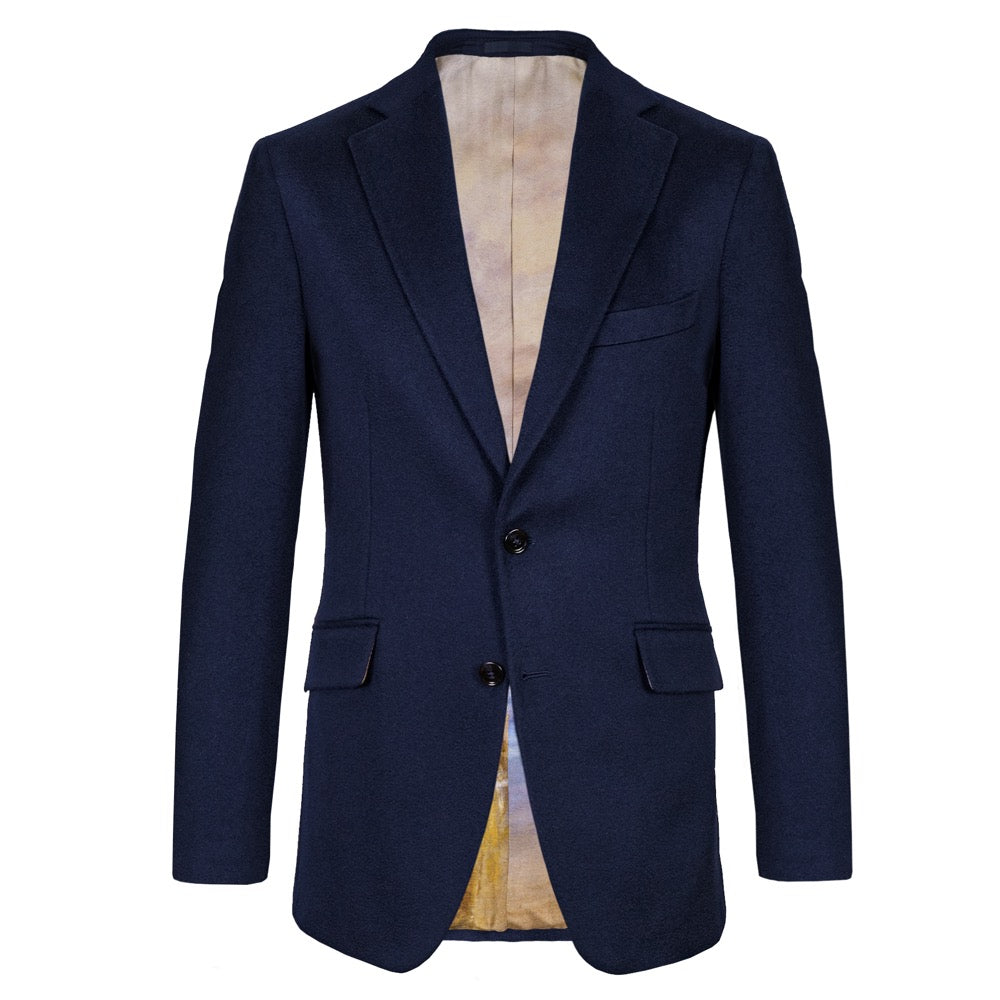
The British version starts somewhere different and arrives somewhere different. It is less about a particular geography of leisure and more about a relationship with cloth over time. Savile Row, yes, but also the inheritance of good things: a morning coat that belonged to someone's grandfather, a dinner jacket altered twice and fitting better for it, a tweed bought in 1987 that has been nowhere near retirement. The British interpretation of old money style is less a look and more an attitude toward ownership: the idea that something properly made deserves to be looked after, and that looking after it is a form of respect for the craft involved in making it.
These two sensibilities overlap considerably, partly because the clothes themselves are often the same clothes, and partly because both traditions are drawing on the same European well. The loafer came from Norway. The blazer arrived via the River Thames. The Oxford cloth shirt has American DNA but English tailoring in its genes. Fashion is not as nationally tidy as mood boards suggest.

What the Look Actually Requires
The Clothes That Make Old Money Style Work
The starting point is not a shopping list but a question: does this piece look better or worse after five years of regular wear? Anything that deteriorates, that goes shiny at the elbows, pills across the chest, loses its shape after a season, is working against you regardless of what it cost. The old money aesthetic, at its most honest, is good taste applied to long-term ownership.
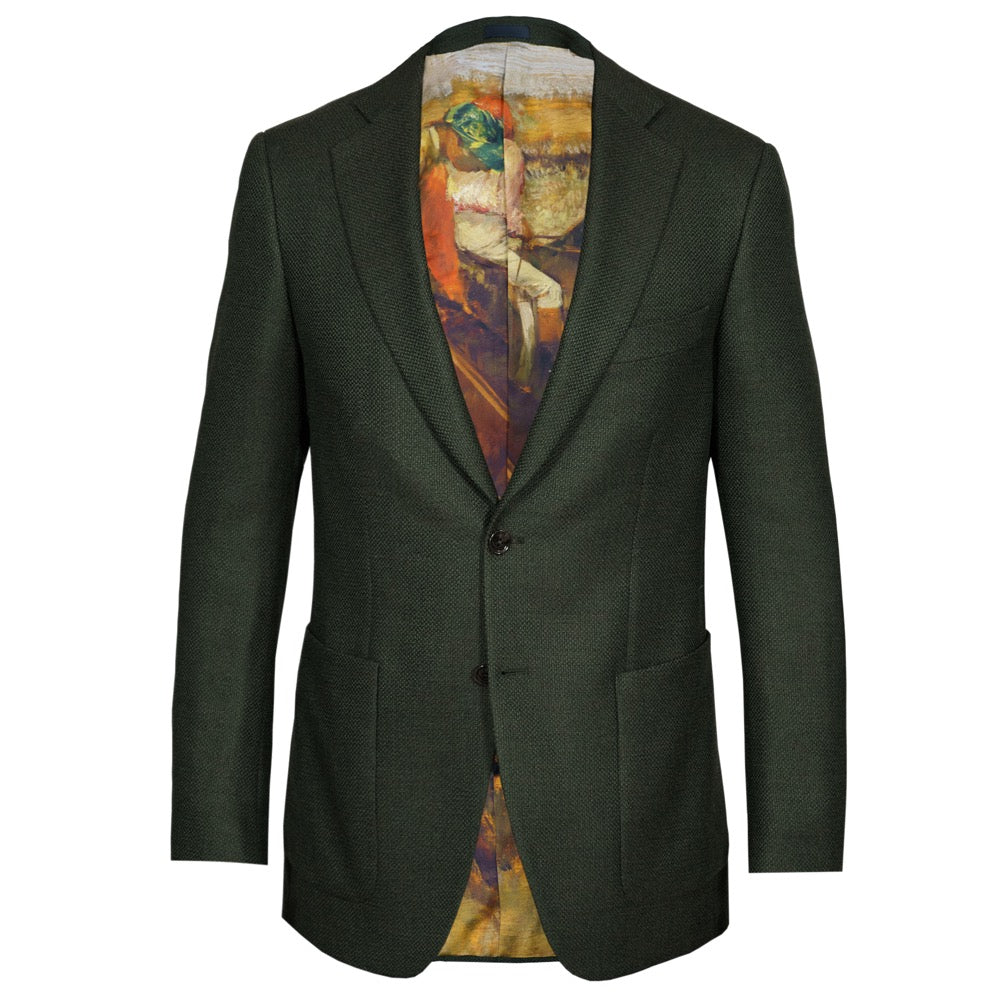
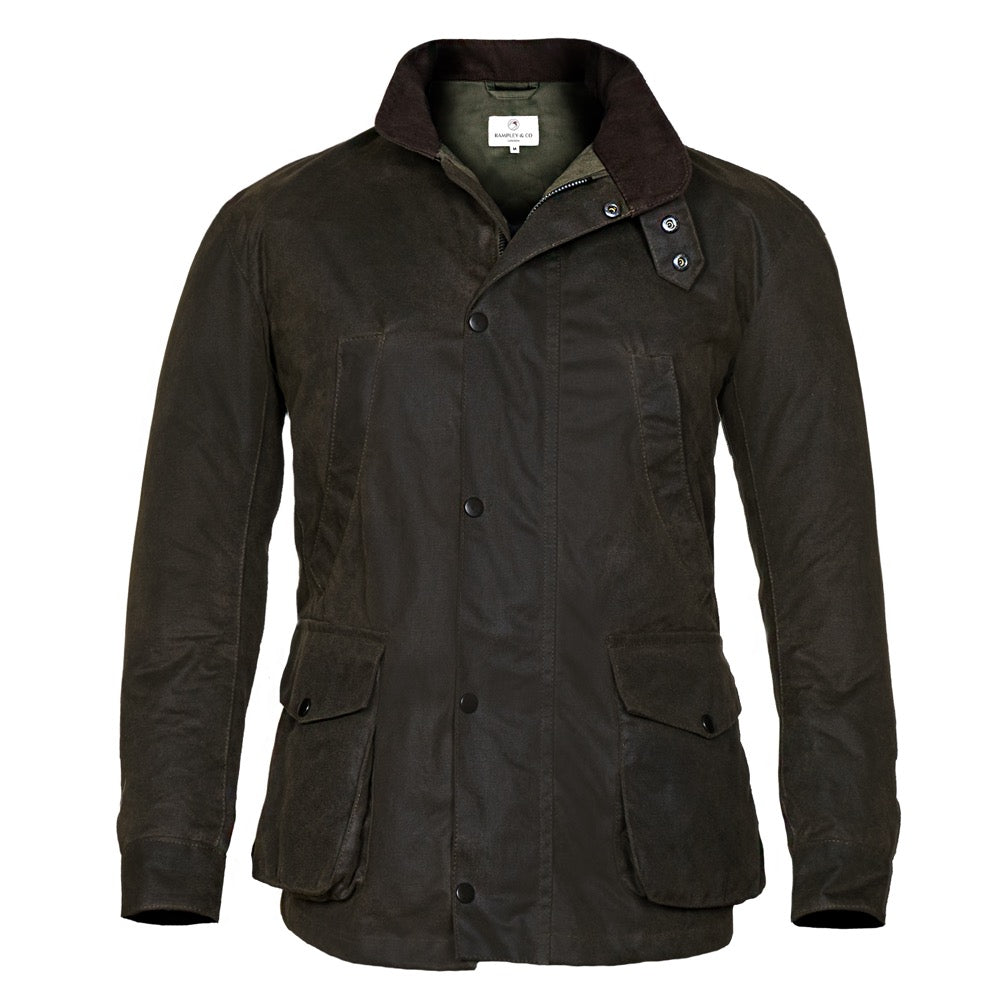
In practice, that translates to a fairly specific wardrobe. Shoes in leather, with soles worth resoling. Shirts in Oxford cloth or a quality poplin that improves with washing rather than collapsing. Trousers with some drape: a stone chino, a mid-grey flannel, something that moves, rather than the stiff over-pressed variety that looks new for exactly one wearing. A jacket that has been lived in: a blue blazer for the American version, something with more texture and personality for the British one. A racing-green hopsack, a Harris tweed, a wax jacket over which many mornings have passed. The Racing-Green Hopsack Wool Jacket sits firmly in this world: the kind of piece that gets better acquainted with its owner over time rather than giving everything up at once.
The accessories are where restraint pays the largest dividend. This is a world with no patience for visible logos, and equally little for things that are obviously new. A braided belt, a watch worn daily for a decade, a pocket square that does not match anything exactly but works with everything broadly: the details that separate someone who understands the sensibility from someone who has merely Googled it.
The One Piece That Changes Everything
Why a Pocket Square Is the Most Honest Expression of This Aesthetic
There is a version of the old money aesthetic that involves a great deal of expensive restraint: the watch, the shoes, the suit. And a version that involves one well-chosen pocket square and everything else being perfectly ordinary. The second version is, arguably, more interesting, and considerably more achievable.
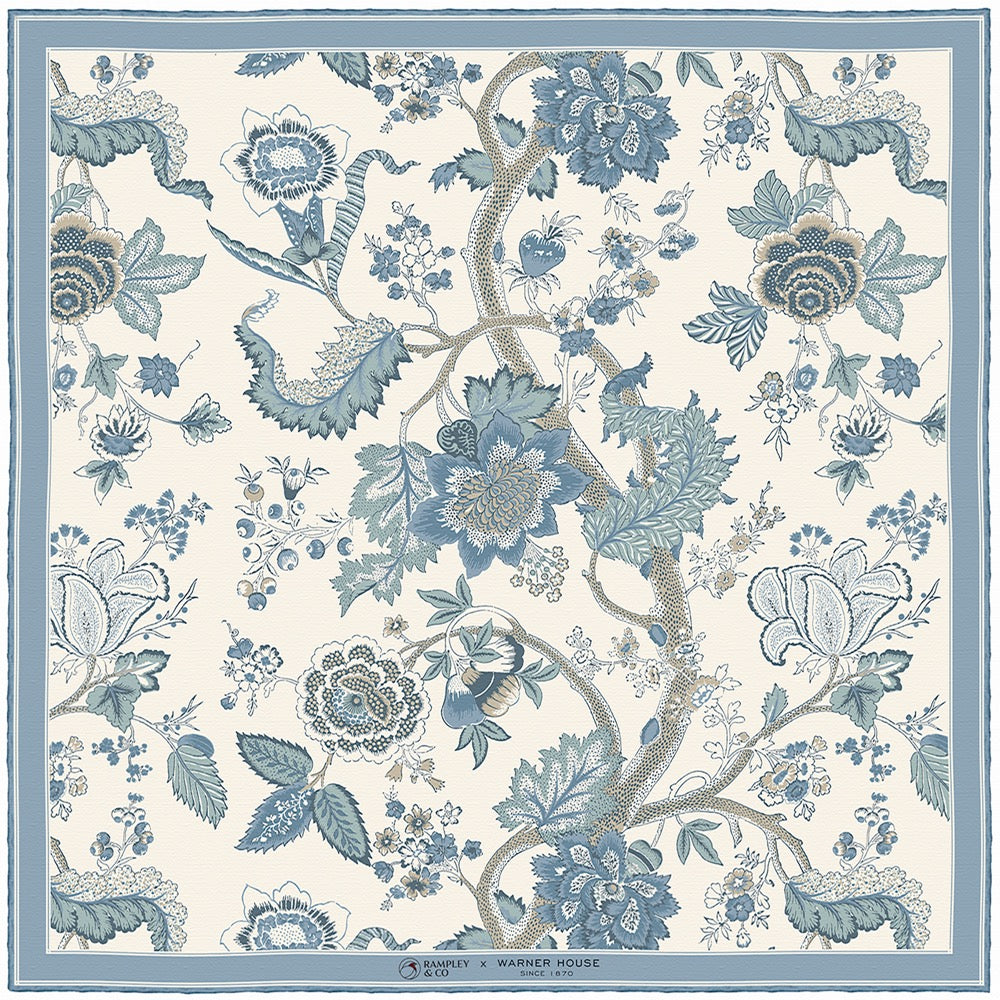
What a pocket square does within this world is carry the colour and personality that the rest of the outfit deliberately withholds. A cream shirt, a navy blazer, stone trousers: the combination is unimpeachable and also, if nothing else is happening, slightly inert. A pocket square in an aqua and ivory print, folded loosely in the breast pocket, is not trying to rescue the outfit. It is simply making it more itself. The Palampore in aqua works precisely this way: a print with enough presence to register without doing anything so crude as demanding attention.
The British version of old money dressing understands this instinctively, which is one of the reasons it tends to be more interesting to look at than the American. Where the American version often stops at the blazer and loafer and considers the job done, the British version reaches for the pocket square, the well-chosen tie, the knitted wool or silk piece in a stripe that is muted enough to feel considered. Not because these things are required, but because the person wearing them is paying attention, and that shows.

The Honest Version of the Argument
What Old Money Style Gets Right, and What the Trend Gets Wrong
The useful core of the old money aesthetic is this: buy things that are well made, wear them until they have earned their character, and do not replace them simply because something newer has appeared. This is not a radical position. It is, in fact, the most straightforward approach to dressing well that exists, and it has the significant advantage of being cheaper in the long run than the alternative, which is buying things every season that look fine for six months and then quietly become embarrassing.
What the trend version gets wrong is the order of operations. The mood board comes before the wardrobe, the aesthetic before the understanding, the look before the relationship with the clothes. Someone who has actually dressed this way for twenty years does not look like someone who discovered it last February. The frayed collar on the old shirt is not an affectation: it is evidence. The jacket that fits so well is not luck: it has been worn enough times to find its shape on the particular person wearing it. These things cannot be purchased in a single afternoon, which is either the frustrating part or the point, depending on your patience.
The tailored jacket collection and the pocket square collection are where the process begins rather than ends. Not as costume, but as starting point. The character comes later, with wearing.
Frequently Asked Questions
Your Questions Answered
What is the old money aesthetic?
The old money aesthetic is a style sensibility built on quality, understatement, and the visible evidence of clothes being worn and kept well over time. In its American form it draws from Ivy League and East Coast preppy traditions: Oxford shirts, blue blazers, loafers, pleat-front chinos. The British version is less about a specific look and more about an attitude to ownership: inherited pieces, well-maintained cloth, things that improve with wear rather than deteriorating from it. The two overlap considerably, and both are making essentially the same argument about buying well and keeping things.
How do you achieve the old money look without it looking try-hard?
The look works when the clothes have been worn rather than acquired. Start with pieces that will improve over time: a properly constructed jacket, a good leather shoe, an Oxford cloth shirt. Actually wear them rather than saving them. Avoid anything that announces itself loudly, whether through visible logos, trend-specific details, or that slightly-too-new quality that good clothes shed naturally after a dozen wears. The restraint in the wardrobe should feel like a preference, not a performance.
What is the difference between American and British old money style?
The American version is more specific in its references: the Ivy League campus, the East Coast town, the sack blazer and boat shoe. It is a look with a clear geography. The British version is harder to pin down because it is less about a particular set of garments and more about a relationship with cloth over time: inherited pieces, well-maintained tailoring, the kind of frayed shirt collar that is evidence of actual use rather than studied negligence. Both are making the same argument about quality and longevity; they are just starting from different places.
What jacket is best for the old money aesthetic?
For the American version, a blue blazer with some volume in the front quarters and either plain or brass buttons is the standard reference point. For the British version, something with more texture and character tends to work better: a hopsack in green or brown, a wax jacket, a Harris tweed. The common requirement in either case is that the jacket is lightly structured, fits well without looking corporate, and looks better for having been worn rather than worse. A jacket that has found its shape on a particular person is always more convincing than one that has not yet left the rail.
Does the old money aesthetic work in a British context?
Yes, and arguably better than in the American context, because the British version of this sensibility predates the trend by several decades and does not require any specific cultural reference to make sense. Dressing well, buying quality, keeping things: these are straightforwardly sensible positions in any context. The specific garments associated with the American version, Oxford shirts, blazers, loafers, translate without difficulty. What does not translate is the preppy geography, which is fine, because the British version is not particularly interested in it.
To view the full tailored jacket collection, click on the button below.