

How to Measure a Jacket or Blazer for Online Buying: The Four Key Measurements
Buying a jacket without trying it on sounds like a gamble until you realise most of the guesswork disappears with four measurements taken from one you already own. Leah from Rampley & Co talks through exactly where to place the tape, in order of importance, so the jacket that arrives fits the way a considered purchase should.
Shop the Video


For more styling tutorials subscribe to our channel
Subscribe to Our ChannelGetting It Right First
Why Getting Your Jacket Measurements Right Matters
Two rules cover most of what matters here. The shoulder seam is the one measurement that cannot be corrected after the fact, so it carries more weight than everything else combined. Once a jacket sits correctly across the shoulders, a good local tailor can adjust almost anything else: the waist, the length, the sleeve, all of it comes in easily enough and rarely costs much. Taking a jacket out again is a different matter entirely, which is why the second rule follows naturally from the first. When a choice sits between two sizes, the larger one wins every time. Fabric can be removed. It cannot be added back.
Where to Start
How to Measure Shoulder Width (Point to Point) on a Jacket
Known in the trade as the point to point measurement, this is the distance across the back of a jacket from one shoulder seam to the other, taken where the sleeve meets the body. A jacket already known to fit well is the best reference here, laid flat on a table or, as in the video, over a mannequin. The tape runs in a straight line seam to seam across the back, and that single number does more to predict a good fit than any other measurement on this list.


The Second Measurement
How to Measure Jacket Length for the Right Fit
Jacket length decides whether short, regular or long is the correct choice, and it starts at the collar. Lifting the collar reveals the seam where the fabric meets it at the centre back, which is the starting point for the tape. From there the measurement runs straight down the spine of the jacket to the bottom hem. It is a simple enough measurement to take, though a second pair of hands makes it easier to keep the tape straight down the back.


On the Hanger
How to Measure a Jacket Sleeve Correctly
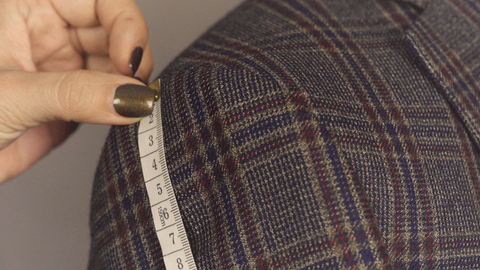
Sleeve length is easiest to get right with the jacket on a hanger rather than a body, since the fabric hangs naturally and the tape has less to fight against. The tape starts just above the sleeve head, allowing for any shoulder padding, and runs down the centre of the sleeve to the end of the cuff. A common error is starting the measurement too low, which shortens the reading and can lead to a jacket ordered a size longer in the arm than actually needed.

From the Body, Not the Jacket
How to Take a Waist Measurement for Slim or Regular Fit
The final measurement is the only one taken from the body rather than the jacket, and it decides between a slim or regular fit. The tape sits around the waist at its widest point, pulled to a comfortable rather than a tight fit. This single number, set against the size charts below, settles the question of cut far more reliably than guesswork based on a favourite jacket from a few years ago, since waistlines have a habit of moving on quietly while the memory of a good fit stays exactly where it was.

The Numbers That Decide
Rampley & Co Jacket Size Charts in Centimetres and Inches
With all four measurements in hand, the size charts below do the rest of the work. Both are set out in centimetres and inches for the slim and regular fit options, covering short, regular and long lengths. Anyone wanting the full detail beyond what is shown here can find it on our jacket size guide.


Beyond the Tape Measure
What Makes a Rampley & Co Jacket Different
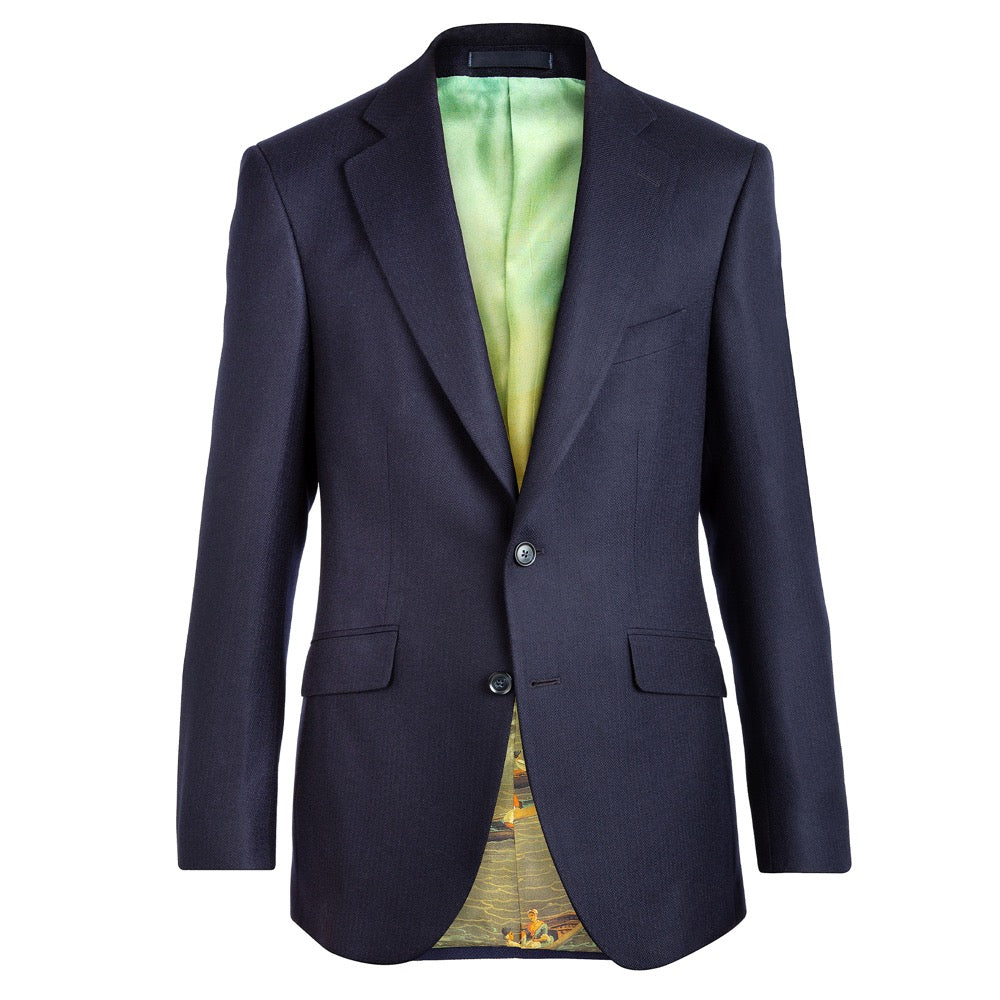
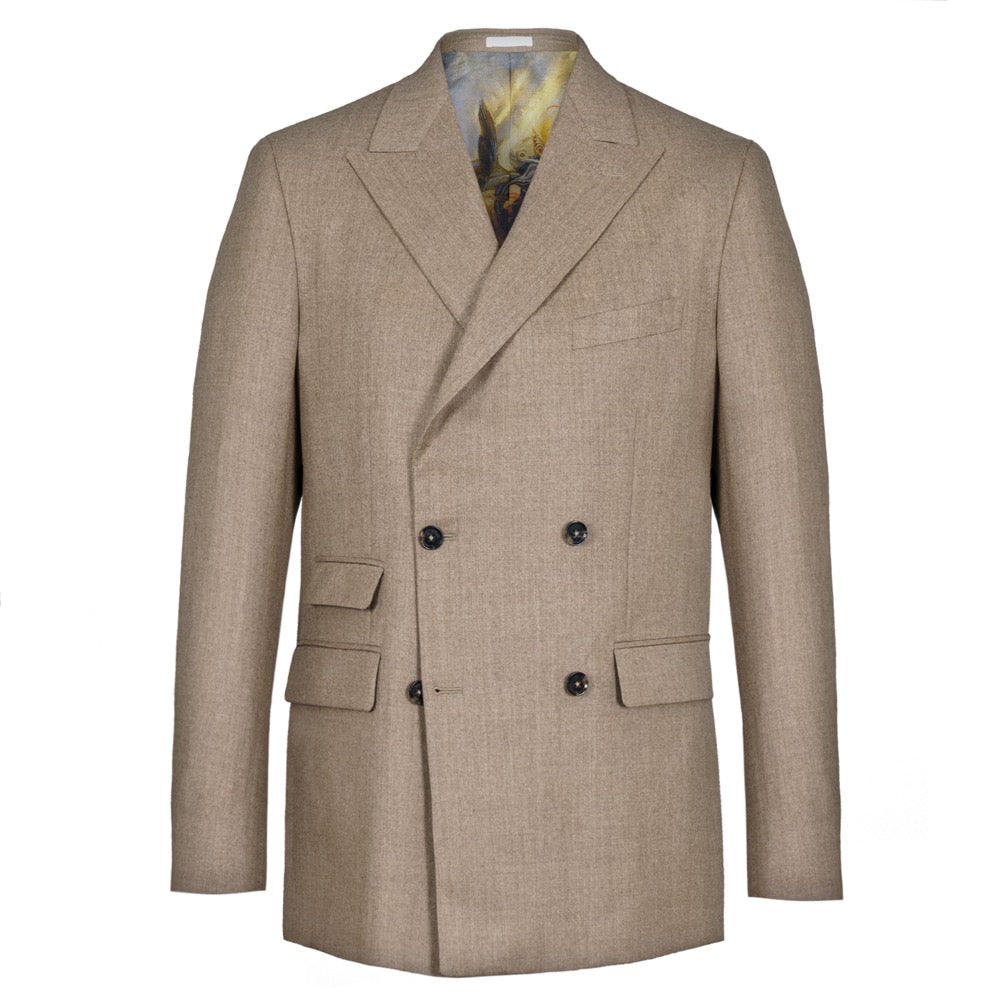
Every jacket in the collection is made to order, cut and constructed only once it has been commissioned, which is part of why the measurements above matter so much before that process begins. The cloth is chosen from a collection of fine wool, linen and wool-blend fabrics, with the same standards applied whether you are after a hopsack weave or a flannel, and each jacket carries a choice of silk lining drawn from a collection that includes reproductions of Canaletto, Giordano, Turner and Rubens, with a bespoke lining option available for anyone after something more particular. Lightly padded shoulders, medium notch lapels, kissing buttons, flap pockets and a double vent complete the shape, in both slim and regular cuts. Anyone curious about the other end of ownership might enjoy our piece on five ways a tailored jacket gets ruined.


More to Explore
Explore More Jackets


Frequently Asked Questions
Frequently Asked Questions About Measuring a Jacket for Online Buying
How do I measure my jacket for buying online?
Lay a jacket that already fits well on a flat surface and take four measurements in order of importance: shoulder width (point to point), jacket length, sleeve length, and a waist measurement taken from the body rather than the jacket. Match these against our size charts to choose the correct size and fit.
What is the most important measurement when buying a jacket online?
Shoulder width, known as the point to point measurement, matters more than any other. A tailor can adjust the waist, length or sleeve of a jacket relatively easily and affordably, but the shoulder seam is very difficult to alter once the jacket is made.
How do I know if I need a slim or regular fit jacket?
Take a waist measurement directly from your body at its widest point, rather than from an old jacket, and compare it against the slim and regular fit columns on our size chart. The waist measurement is the deciding factor between the two fits.
What should I do if I am between two jacket sizes?
Choose the larger size. A jacket can be taken in at the waist, sleeve or length by a local tailor for relatively little cost, but there is very little that can be done if a jacket has been ordered too small.
Do I need someone to help me take jacket measurements?
It helps but is not essential. Shoulder width and length are slightly easier with a second pair of hands to keep the tape straight, though both can be measured alone with the jacket laid flat on a table.
How accurate do online jacket measurements need to be?
Reasonably accurate rather than exact. A margin of half a centimetre either way rarely changes which size is correct, though the shoulder measurement is worth taking carefully since it has the least room for adjustment after the jacket is made.
To view the full collection click on the button below.