

Four Pocket Square Folds for a Wedding
A wedding is one of the few occasions where the pocket square does serious work. The photographs alone guarantee it: whatever sits in your breast pocket at noon will be there in the album in thirty years. The fold you choose is therefore a more deliberate decision than it tends to be on an ordinary Tuesday, and the square beneath it matters just as much as the fold itself.
Enter our prize draw to win 4 style guides and £500 to spend
Shop the Video
 Dark-Grey Wool Flannel Jacket
£[Price]
Dark-Grey Wool Flannel Jacket
£[Price]
 Grey Shantung Silk Tie
£[Price]
Grey Shantung Silk Tie
£[Price]
 Portrait of Yada Gorosaemon Suketake Pocket Square
£[Price]
Portrait of Yada Gorosaemon Suketake Pocket Square
£[Price]
 Light-Grey Hopsack Wool Blend Jacket
£[Price]
Light-Grey Hopsack Wool Blend Jacket
£[Price]
 Map of The Battle of Trafalgar Pocket Square
£[Price]
Map of The Battle of Trafalgar Pocket Square
£[Price]
 Brown & Ocean Blue Stripe Shantung Silk Tie
£[Price]
Brown & Ocean Blue Stripe Shantung Silk Tie
£[Price]
 Ivory, Crimson & Blue Madder Silk Pocket Square
£[Price]
Ivory, Crimson & Blue Madder Silk Pocket Square
£[Price]
 Light-Brown Stripe Cotton-Blend Jacket
£[Price]
Light-Brown Stripe Cotton-Blend Jacket
£[Price]
 Cream & Brown Stripe Tie
£[Price]
Cream & Brown Stripe Tie
£[Price]
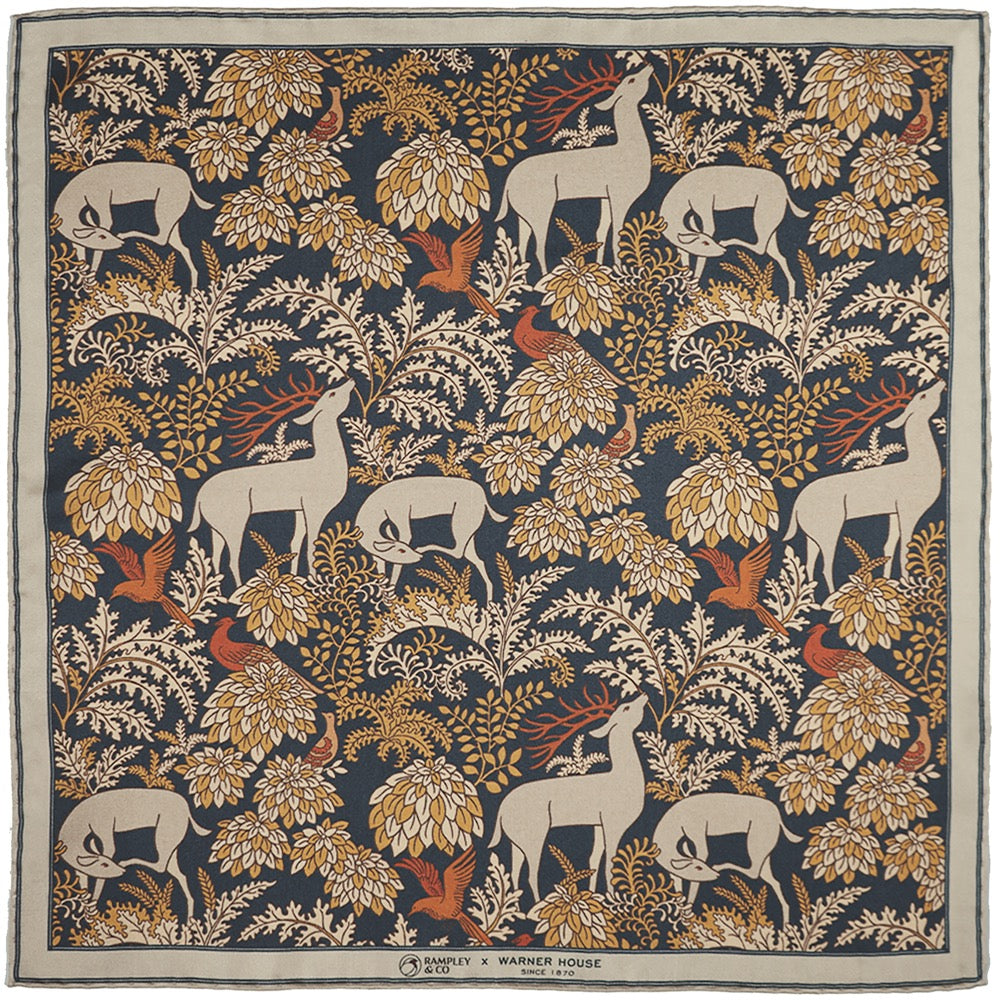 Balmoral, Navy Pocket Square
£[Price]
Balmoral, Navy Pocket Square
£[Price]
 Navy & White Micro Dot Silk Tie
£[Price]
Navy & White Micro Dot Silk Tie
£[Price]
 Pink Superfine Merino Wool Jacket
£[Price]
Pink Superfine Merino Wool Jacket
£[Price]
 The Varenna, Vintage Tie, c. 1962
£[Price]
The Varenna, Vintage Tie, c. 1962
£[Price]
 Napoleon Crossing the Alps, in Crimson by Jacques-Louis David Pocket Square
£[Price]
Napoleon Crossing the Alps, in Crimson by Jacques-Louis David Pocket Square
£[Price]
 Burgundy & White Micro Dot Silk Tie
£[Price]
Burgundy & White Micro Dot Silk Tie
£[Price]
For more styling tutorials, subscribe to our channel
Subscribe to Our ChannelThe Case for Getting It Right
Why the Pocket Square Fold Matters More at a Wedding Than Anywhere Else

Most occasions offer some latitude. At the office, a pocket square that has shifted during the morning reads as lived-in rather than careless. At a wedding, there is no such mercy. The photographs deal with it. Whatever sits in your breast pocket at the ceremony will be visible in close-up, in natural light, for the next several decades. It is worth treating that as the design brief it is.
There is also something worth understanding about what the fold actually demonstrates. Four different folds on the same jacket and tie can shift the entire register of an outfit without touching a single other element. The Dark-Grey Wool Flannel Jacket and Grey Shantung Silk Tie will carry a flat fold with Napoleon at the breast pocket as comfortably as they carry the Balmoral, Navy in a reverse puff at the other end of the scale. The jacket and tie are the foundation. The square and the fold determine what the outfit is actually saying.
What the square is made of determines whether the fold survives the day. A fine mulberry silk square, printed in Macclesfield with the colour bleed running cleanly through to the reverse, will hold a fold from the ceremony through to the last dance. A lesser square will not. Size is part of it too: anything below 40cm starts to struggle inside the pocket once the afternoon gets going.
Formal Folds
The Flat Fold: The Most Precise Pocket Square Fold for a Wedding

The flat fold is the one a tailor would recognise without being asked. A thin, clean line of silk sitting level above the welt, it says nothing that needs saying twice. It is the right choice for a morning suit, for black tie, for any occasion where the dress code is written in invisible ink but enforced with considerable attention. It signals that the wearer knows the register and has chosen, deliberately, to operate within it.
The construction is straightforward. The square is folded in half, then folded again until the width sits comfortably against the depth of the breast pocket. It drops into the pocket so that a consistent strip of silk, half an inch to an inch, clears the welt. Two finishing options exist: the border edge, which shows the hand-rolled hem and works well with a square that has a strong design, or the folded edge, which produces a cleaner, more neutral line and suits very formal occasions where any suggestion of decoration is one too many.
A pictorial square like the Napoleon Crossing the Alps, in Crimson by Jacques-Louis David carries this fold particularly well against dark grey flannel. The flat fold keeps the design visible above the pocket in a controlled strip rather than spreading it across the chest, and the crimson reads with quiet confidence against a Grey Shantung Silk Tie. It is a combination that repays the attention of the room without demanding it.
The same square works equally well against a navy or midnight blue jacket, where the crimson of the David painting has even more room to declare itself. A navy grenadine tie or a deep burgundy stripe would both sit comfortably alongside it. For a morning suit, the flat fold in white or ivory is the conventional choice, but this square in a flat fold over a morning coat and a silver tie is a considerably more interesting alternative that stays within the formal register.

Formal Folds
The Puff Fold: The Timeless Formal Alternative

Where the flat fold suppresses the square, the puff fold gives it room to move. A soft dome of silk rising above the pocket, it catches the light differently as the wearer turns and has the considerable advantage of displaying the full character of a pictorial square rather than reducing it to a horizontal strip. It has been the standard formal fold for the better part of a century and does not appear to be troubled by this.
The square is pinched at its centre and drawn down through a loose circle of thumb and index finger until roughly a quarter of the fabric remains below the hand. The puff is eased outward to give it volume, the excess below twisted and tucked to secure the base. The square sits puff-first in the pocket, the dome adjusted until it reads evenly above the welt. There is a point at which the fold has been arranged enough. Past it, the result looks effortful rather than effortless, which defeats the purpose entirely.
The Portrait of Yada Gorosaemon Suketake is a natural choice here. The Japanese woodblock composition, reproduced across the full face of the square, benefits from a fold that displays the image rather than parcelling it into a strip. Against dark grey flannel and a Grey Shantung Silk Tie, it sits with the kind of authority that comes from knowing the combination is correct and feeling no need to explain it.
The earthy tones of the woodblock palette also make this square particularly good company for a brown or camel jacket. A light-brown stripe cotton-blend jacket with a navy or teal tie, or a camel hopsack with an olive grenadine, both give the ochres and blacks of the Yada portrait a warm ground to work against. It is a square that crosses the seasonal register more easily than most pictorial designs.

Relaxed Folds
The Crown Fold: The Right Pocket Square Fold for a Summer Wedding

The crown fold occupies the middle ground with more confidence than most middle grounds manage. Two or three points rise above the pocket in a neat formation: structured enough to look deliberate, light enough to suit an outdoor ceremony or a garden reception where the flat fold would look as though it had wandered in from a different occasion entirely. It works particularly well with a square that carries cartographic or pictorial detail close to its edges, since the points draw the eye upward and let the design speak above the welt.
Two diagonally opposite corners are pinched and brought together to form an even triangle. The far right corner folds across to produce a smaller triangle; the process repeats. The square turns over, a finger at the centre of the base brings one edge up into the middle, the same movement on the other side creates a kite shape. One final turn reveals the points of the crown at the top. Neatened, tucked, and placed in the pocket, the points are spread to the desired width with a finger. It is a fold that rewards a little patience and repays it visibly.
The Map of The Battle of Trafalgar lends itself to this fold precisely because its cartographic detail runs across the full face of the square. The crown pulls the upper portion clear of the pocket so the detail sits properly above the welt rather than disappearing into it. Against a Dark-Grey Wool Flannel Jacket and Grey Shantung Silk Tie, the combination has a quietly particular quality that is harder to achieve with a more conventional fold.
For a summer wedding or a lighter occasion, this square moves well into a linen or hopsack jacket. A light-grey hopsack with a navy or brown stripe tie lets the blue and cream of the cartographic design do the work without too much competition. A pink superfine merino jacket with a burgundy or wine-coloured tie is a more unexpected pairing that pays off: the warm tones of the jacket pull the warmer inks in the map forward and give the combination more personality than the grey flannel version, without losing any of its formality.

Relaxed Folds
The Reverse Puff Fold: For the Less Formal Wedding

The reverse puff fold is the most accommodating of the four. It is the puff fold turned on its head: the points emerge at the top rather than the dome, giving the square a more spontaneous, slightly improvisational quality that reads well at a country house wedding, an outdoor ceremony, or any occasion where the dress code acknowledges that summer exists. At a morning suit wedding it looks like a decision that could not quite commit to itself. Deployed at the right occasion, it looks like someone who dresses well and knows it.
The process follows the puff fold up to a point. The square is pinched at its centre and drawn down through a loose circle of thumb and index finger. Where the puff fold holds the base steady, the reverse puff twists the lower section and folds it back on itself, away from the body. The points that were at the bottom of the square emerge at the top. Because the fold has no fixed structure, the points can be spread wide for something more expressive, or held closer together for a result that reads almost like a conventional puff from a distance.
The Balmoral, Navy on a reverse puff against a light-grey hopsack demonstrates something worth understanding about fold choice: the formality of the jacket does not determine the formality of the outcome. A light-grey hopsack with a Grey Shantung Silk Tie is already a relaxed proposition. Add the Balmoral in a reverse puff and the combination tips decisively toward the summer wedding end of the scale, where the movement above the pocket reads as considered ease rather than dressed-down accident. That, at most warm-weather weddings, is exactly where you want to be.
The Balmoral is one of those squares that moves comfortably across the full range of lounge suit occasions. Against a light-brown stripe jacket with a cream or ivory tie it reads as warm and relaxed without being casual. Against a navy jacket it becomes a tone-on-tone combination that works because the texture of the square introduces enough contrast to stop the pairing looking flat. The light grey hopsack shown here is one of the most versatile foundations for it: pale enough to let the navy of the Balmoral read clearly, relaxed enough in handle to suit an outdoor or summer wedding without any adjustment.

Choosing the Right Square
What to Look for in a Wedding Pocket Square

The fold is only half of it. A square that is too small, too thin, or too poorly printed will undermine any fold before the first hour is out.
Size. Forty centimetres square is the minimum worth considering. Below that, the more voluminous folds, the puff, the crown, the reverse puff, will not hold their shape through the afternoon. The Rampley & Co collection runs to 42cm x 42cm on most designs, which is enough to work with properly and not so large that the fold becomes a construction project.
Fabric. Silk is the right choice for a formal or semi-formal wedding. It holds a fold, drapes cleanly, and photographs with a richness that other fabrics rarely match. The colour bleed on a well-printed mulberry silk square runs almost as crisply through to the reverse as it does on the face, which matters the moment you choose a fold that exposes the back of the square above the welt. Linen is a reasonable choice for a relaxed summer wedding or an outdoor reception, though it is less willing to hold a structured fold through a long evening.
Design. A pictorial or fine art square is best served by a fold that displays the full face: the puff fold or the crown fold, which lift the image above the pocket without interrupting it. A square where the interest lives in the border, a hand-rolled edge, a contrasting trim, benefits from the flat fold, which keeps the border visible above the welt. A plain white or ivory square is still the most versatile choice for a very formal occasion, and the one that will never look wrong regardless of what surrounds it.
The fold you choose says something about how seriously you are taking the occasion. Choose well, and nobody will notice. Choose carelessly, and several people will.
Dress Code and Fold
Which Pocket Square Fold Suits Which Wedding Dress Code

Morning suit: flat fold or puff fold, white or ivory silk, nothing that announces itself across the room. Black tie follows the same logic. Lounge suit opens up the full set of four folds, and the choice of square can open accordingly. Smart casual or garden party is the territory of the crown fold and the reverse puff, where a more colourful or pictorial square suits the atmosphere and a plain white one would look as though it had come to the wrong party.
The mistake that appears at weddings with reliable frequency is the pocket square holder: the square pressed into a manufactured shape, placed inside a plastic or card frame, and dropped into the pocket as a single unit. The results look precisely as mechanical as they are. In photographs taken from any angle, the holder is visible. In close-up, the fold has the rigidity of something that has never been touched. A well-made silk square, folded by hand, adjusted by eye, and left to settle naturally above the welt, will always look better. The slight imprecision is the point.
Wedding Pocket Squares
 Bird Catching Fish Among Reeds by Seitei Pocket Square
£[Price]
Bird Catching Fish Among Reeds by Seitei Pocket Square
£[Price]
 Spring Morning in the Heart of the City by Childe Hassam Pocket Square
£[Price]
Spring Morning in the Heart of the City by Childe Hassam Pocket Square
£[Price]
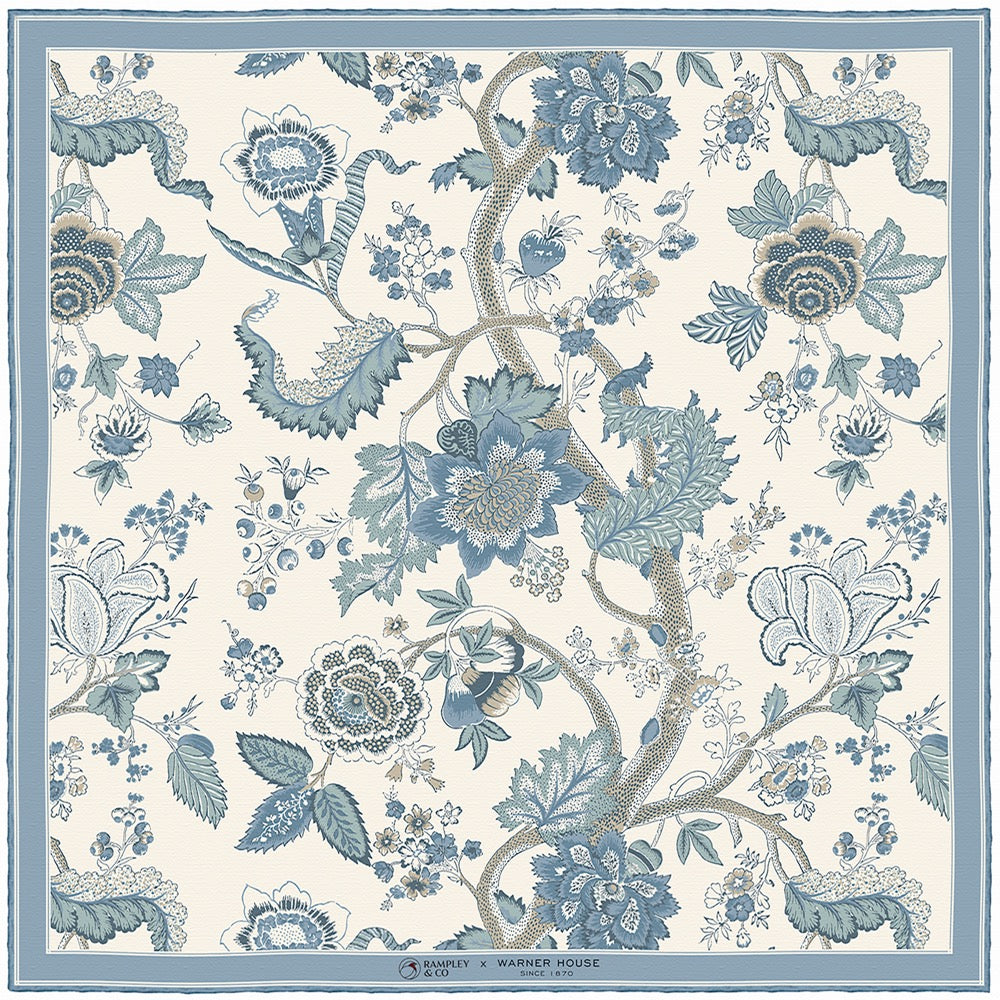 Palampore, Aqua Pocket Square
£[Price]
Palampore, Aqua Pocket Square
£[Price]
 Navy and Sky Blue Spot Pocket Square
£[Price]
Navy and Sky Blue Spot Pocket Square
£[Price]
 La Grenouillere by Monet Pocket Square
£[Price]
La Grenouillere by Monet Pocket Square
£[Price]
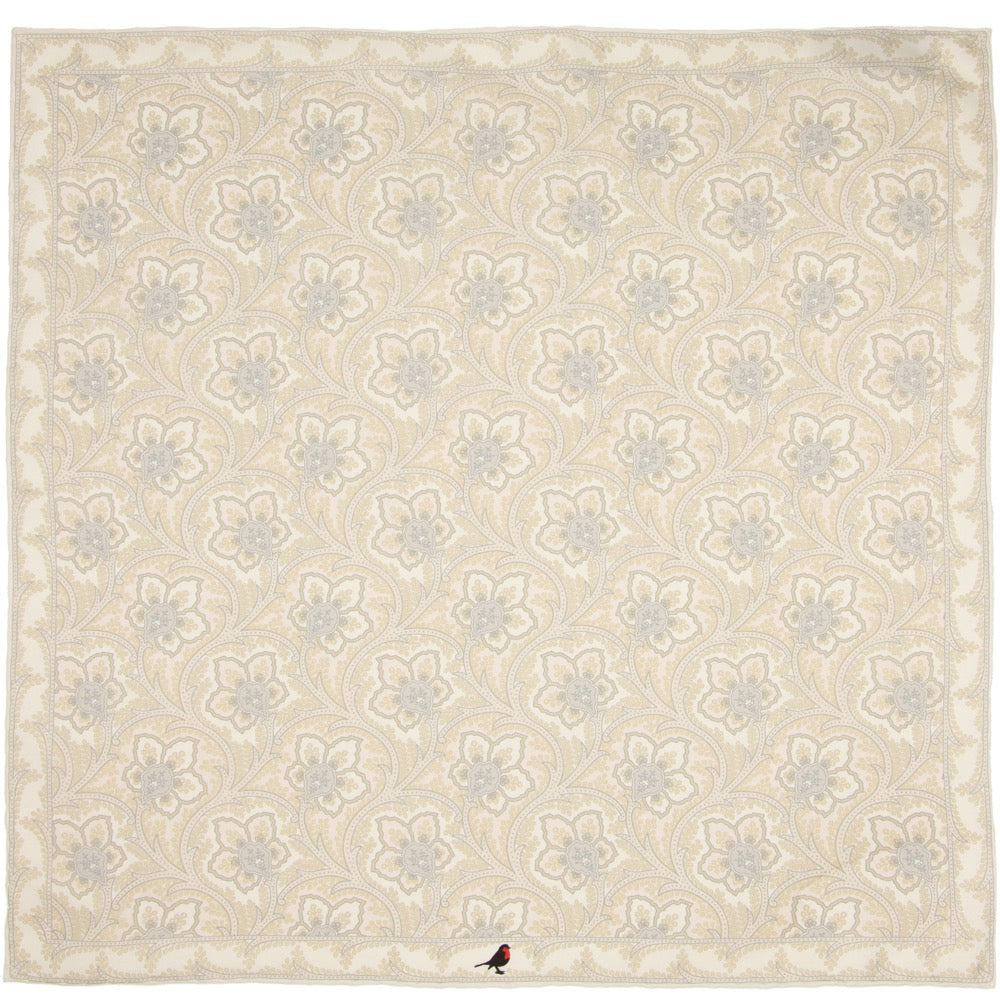 White and Ivory Persian Flower Paisley Pocket Square
£[Price]
White and Ivory Persian Flower Paisley Pocket Square
£[Price]
The Silk Itself
Why Mulberry Silk Makes a Better Pocket Square

The quality of a silk pocket square is not always obvious at first glance, but it becomes apparent quickly once the square is in your hands. The weight, the way it falls, the crispness of the print, the finish of the hand-rolled edge: these are the details that separate a square worth owning from one that will look tired before the first toast.
The Rampley & Co collection is printed in Macclesfield, England, an area with over two hundred years of continuous silk printing tradition. The process is calibrated so that the colour bleed reaches almost as crisply through to the reverse as it does on the face. This is not a trivial consideration: both the crown fold and the reverse puff expose the back of the square above the pocket, and a poorly printed square shows that immediately. A well-printed one looks correct from every angle.
The hand-rolled edge is the final mark of a square that has been properly made. The edge is turned with a needle and small stitches placed approximately half a centimetre apart around the perimeter, producing a raised, supple border that sits slightly proud of the face. On a flat fold, where the border is often the element most visible above the welt, this is the detail that the eye goes to first. It is worth looking for.
Frequently Asked Questions
Your Questions Answered
What is the best pocket square fold for a wedding?
It depends on the dress code and the occasion. For a morning suit or black tie wedding, the flat fold or puff fold are the appropriate choices: both work with a white or ivory silk square and read correctly at a formal occasion. For a lounge suit wedding, all four folds are available depending on the character of the event and the square you are wearing. For a relaxed summer wedding or garden reception, the crown fold or reverse puff fold suit the atmosphere well and give a more colourful or pictorial square room to show itself.
How do you do a puff fold with a pocket square?
The square is pinched at its centre and drawn down through a loose circle formed by the thumb and index finger until roughly a quarter of the fabric remains below the hand. The puff is eased outward to give it volume, and the excess below is twisted and tucked to secure the base. The square sits puff-first in the breast pocket, with the dome adjusted above the welt until it reads evenly. The finished fold should look effortless. Once it starts to look arranged, it has been overdone.
How do you do a flat fold with a pocket square?
The square is folded in half, then folded again until the width sits against the depth of the breast pocket. It drops into the pocket so that a consistent strip of silk, roughly half an inch to an inch, sits clear of the welt. There are two options: the border edge, which shows the hand-rolled hem, or the folded edge, which produces a cleaner, more neutral line. The flat fold is the most formally correct of the four and the right choice for morning suits and black tie occasions.
What is the crown fold pocket square?
The crown fold produces two or three points rising above the pocket in a neat formation, sitting between the formality of the puff fold and the looseness of the reverse puff. It suits a lounge suit or smart casual wedding and works particularly well with pictorial or cartographic pocket squares, since the points draw the eye upward and let the design sit clearly above the welt. It is more structured than the reverse puff but carries considerably more character than the flat fold.
Should a pocket square match the tie at a wedding?
It should relate to the tie without matching it directly. A pocket square that is identical to the tie in colour and pattern looks as though it came in a set and tends to flatten an otherwise considered outfit. The more interesting approach is to find a square that picks up one colour from the tie, or introduces a complementary one, while operating in a different design register. A plain shantung tie pairs well with a pictorial square; a more decorated tie pairs well with something simpler in the pocket.
What size pocket square do you need for a wedding?
A minimum of 40cm x 40cm is needed to hold any of the four folds reliably through a long day. Smaller squares can manage a flat fold but tend to collapse inside the pocket during more voluminous folds such as the puff or crown fold. The Rampley & Co collection runs to 42cm x 42cm on most designs, which is enough volume to hold any fold without adjustment during the day.