

How to Measure a Suit Jacket
Four measurements. Ten minutes. The difference between a jacket that fits and one that doesn't.
- Start with a jacket you already own that fits well — that single reference point will do most of the work.
- If any measurement falls between two sizes, choose the larger.
- A jacket can be taken in; it cannot reliably be let out.
Shop the Video


For more styling tutorials subscribe to our channel here:
Subscribe to Our ChannelBefore You Begin
Why Jacket Fit Is Harder to Fix Than You Think

A jacket is not like most things you buy online. A shirt that is slightly too large can be worn untucked. Trousers that sit a little long can be turned up. A jacket that doesn't fit correctly is a different problem entirely. The most common errors are either impossible to correct once the garment is made, or require alterations so significant that the jacket loses its original character in the process.
Taking the measurements correctly takes around ten minutes and a jacket you already own that fits you well. That jacket is the key tool. Using body measurements alone introduces variables: posture, how the tape sits, where you naturally hold it. A well-fitting reference garment removes all of those. The jacket already knows how it should fit. You are simply reading off the information it contains.
One principle to carry through the whole process: if any measurement falls between two sizes, choose the larger. A jacket can be taken in by a tailor with very little disruption to the garment. It cannot reliably be let out. The canvas, the lining and the seam allowances don't accommodate expansion the way a trouser might.
What You Need
What You Need Before You Start
Three things: a soft tape measure, a jacket you already own that fits you well, and a coat hanger. The tape needs to be flexible enough to sit flat against fabric without pulling. A rigid metal tape introduces small inaccuracies at curved seams that compound when you're trying to match a sizing chart precisely.
The existing jacket matters most. It should be one you reach for regularly and feel comfortable in. Not too tight across the back when you move, not sitting off the shoulder, not pulling at the chest. If you have any doubt about whether it truly fits, it isn't the right reference. Use the one you're most confident in, even if it's older or less formal than the jacket you're ordering.
A flat surface works for most measurements. The exception is sleeve length, where a coat hanger is worth the extra step. It lets the sleeve fall naturally under its own weight rather than shifting slightly toward the front or back of the arm. Our jacket sizing guide is available in both centimetres and inches.
How to Measure a Suit Jacket

-
Shoulder Width: Point to Point
Lay the jacket flat on a surface, face down. Run the tape from shoulder seam to shoulder seam straight across the back. This is the point-to-point measurement, named for the two seam points where the sleeve joins the shoulder panel on each side.
It is the most important of the four, and the reason is architectural. The shoulder seam is the fixed structural point around which the entire jacket is constructed. When it sits correctly, at the natural edge of the shoulder where the arm begins to drop away, the jacket hangs correctly from that point downward. The collar sits cleanly against the neck, the sleeves fall at the right angle, the back lies flat. When the shoulder seam doesn't sit in the right place, none of these things follow. No amount of alteration fully corrects it.
A shoulder that sits even a centimetre too wide creates bunching of fabric at the top of the sleeve that pressing won't resolve. One that sits too narrow pulls the jacket across the back and restricts movement the moment you reach forward. Moving the shoulder seam requires essentially rebuilding the upper jacket. It is expensive, time-consuming and often changes the character of the garment. Make sure the tape sits flat at the level of the seam itself, not above or below it.
-
Jacket Length: Collar to Hem
Lift the collar away from the jacket. Place the tape at the point where the fabric of the jacket body meets the underside of the collar. This seam is only visible once the collar is lifted clear. Run the tape straight down the centre back to the hem. This measurement determines whether you order Short, Regular or Long.
If you place the tape at the visible top of the collar rather than the seam beneath it, you include the collar's own depth in the measurement and inflate the figure by a centimetre or more. The starting point matters.
The traditional guide, that the hem should sit where the fingers naturally curl when the arms hang at the sides, remains the most reliable rule. A jacket sitting significantly above this tends to look abbreviated and can make the torso appear short. One sitting significantly below it tends to look heavy. Most men fall into Regular, but torso-to-leg ratio matters as much as overall height. Our sizing guide has the exact figures in both centimetres and inches.
-
Sleeve Length
Hang the jacket on a hanger before taking this measurement. A sleeve laid flat shifts slightly in the fabric; on a hanger it falls naturally under its own weight and gives a truer reading. Place the tape just above the sleeve head, the curved padded point where the sleeve joins the shoulder, rather than at the very top. Starting above the sleeve head accounts for any padding built into it. Starting at the absolute top includes that padding in the figure and inflates it slightly.
Measure straight down the centre of the sleeve to the end of the cuff. Keep the tape on the centre line rather than the underarm seam, which runs at an angle and gives a longer reading.
Sleeve length is the most forgiving of the four measurements. Shortening a sleeve by a centimetre or two is a standard alteration that any good tailor can carry out without affecting the jacket. The conventional finish, approximately 1 to 1.5 centimetres of shirt cuff showing below the jacket sleeve when the arm hangs naturally, is as much a function of how the shirt fits as how the jacket fits. A sleeve that looks too long with a shirt whose cuffs sit too high on the wrist is a shirt problem, not a jacket problem.
-
Waist: Slim or Regular Fit
This is the only measurement taken from your body rather than an existing jacket. Wrap the tape around your natural waist at its widest point and take a comfortable reading. Not pulled taut against the skin, and not so loose that it sags. The tape should sit flat with enough room to breathe normally. This comfortable measurement is what corresponds to the fit options in our sizing chart.
Slim fit has more waist suppression through the torso, producing a closer, more defined silhouette. Regular fit has more ease through the chest, waist and hips, which suits a broader range of builds and is more comfortable for extended wear. Neither is superior. The right choice depends on how you prefer your clothing to sit and what the rest of your wardrobe looks like.
It's worth noting that a single waist measurement can't capture every aspect of body shape. If you carry more volume across the chest or hips relative to your waist, a Slim fit may feel restrictive at those points even if the measurement suggests otherwise. This is exactly the kind of question our Product Concierge team handles well. More on that further down.
The shoulder seam is the fixed point around which the entire jacket is built. Get it right and everything else follows.


Once It Arrives
How a Tailored Jacket Should Fit

A few reference points to check when the jacket arrives. The shoulder seam should sit exactly at the edge of the natural shoulder, with no overhang beyond the shoulder line and no pulling inward toward the neck. Run a finger from collar to sleeve head; it should be a smooth, unbroken line without bunching or gaps.
The back should lie flat against the upper back. Horizontal pull across the shoulder blades means the jacket is too small across the chest and cannot be corrected without significant alteration. Vertical folds hanging down from the shoulder mean the jacket is too wide. At the front, the lapels should lie flat and the jacket should close without pulling at the button.
The hem should sit where the fingers curl when the arms hang naturally. The sleeve should show approximately 1 to 1.5 centimetres of shirt cuff at rest. If something isn't right, write to us at info@rampleyandco.com before making any decisions. Most fit issues beyond the shoulder can be addressed by a local tailor, and the team can advise on exactly what to ask for. Every jacket is backed by a 90-day returns policy.
Made to Order
Why These Jackets Are Made to Order

Every jacket in the Rampley & Co tailored jacket collection is made to order in Portugal, in a workshop with a long tradition of tailored construction. Each jacket is built specifically for the person who ordered it, to their measurements, in the cloth they have chosen. It is not pulled from a warehouse of pre-made stock. It takes longer to arrive, and it is worth the wait.
The canvas construction, rather than a bonded interlining, allows the jacket to mould gently to the body over time. A jacket ordered with accurate measurements will fit progressively better with wear as the canvas relaxes and takes on the shape of the person wearing it. The cloth itself, superfine merino wool, cashmere blends and wool flannel, produces a garment that sits and moves differently from a fully fused mass-market jacket.
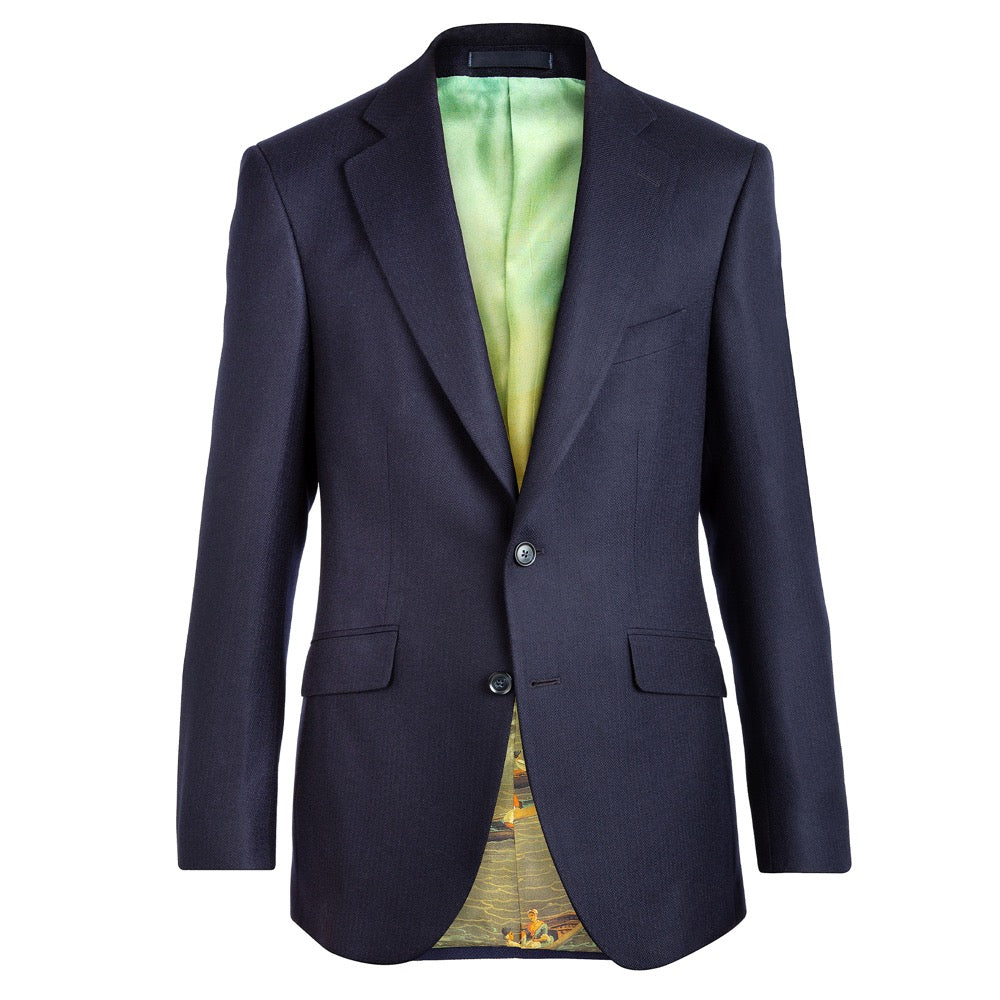
Each jacket is lined with a choice of fine art silk from the Rampley & Co pocket square collection, selected at the time of ordering. The lining determines how the jacket feels against a shirt, how it moves when you put it on and take it off, and what a person sitting opposite you sees when you remove the jacket and lay it over the back of a chair. It is the part of the jacket that is entirely yours.


Not Sure Where to Start?
Order With Confidence
Ordering a made-to-order jacket involves a degree of trust, particularly if it's your first. The measurements covered in this guide will get you most of the way there. But if you're unsure about any of them, or if your proportions don't map neatly onto the standard size options, our Product Concierge team is there to bridge the gap.
They can work through your measurements directly, discuss cloth and lining options, and help identify which size, length and fit combination is most likely to suit you before you place your order. They know the collection well: the differences between cloth weights, how different fits sit on different builds, which linings work best with which cloths. Write to them at info@rampleyandco.com before you order and they'll take it from there.
From the Collection


Frequently Asked Questions
Your Questions Answered
Should I measure myself or an existing jacket?
For shoulder width, jacket length and sleeve length, work from a jacket that already fits you well. For waist, measure directly from your body. The combination of both gives the most reliable result.
What is the most important measurement when buying a tailored jacket?
Shoulder width. A jacket shoulder that sits too wide or too narrow cannot be corrected by a tailor without work that fundamentally alters the character of the garment. Every other measurement is more forgiving.
What if I am between two jacket sizes?
Choose the larger size. A jacket can be taken in by a tailor; it cannot reliably be let out. The structure of a tailored jacket doesn't accommodate expansion the way a trouser might.
What measurements does Rampley & Co need to size a tailored jacket?
Four: shoulder width (point to point across the back), jacket length (collar to hem), sleeve length (just above the sleeve head to the cuff) and waist circumference. These four measurements determine your size, the right length option and your fit.
What is the difference between slim fit and regular fit in a tailored jacket?
Slim fit has more waist suppression, following the body more closely through the torso. Regular fit has more ease through the body and suits a broader range of builds. Your waist measurement guides the decision; your preference for how clothing sits confirms it.
Do Rampley & Co jackets come in centimetres and inches?
Yes. The sizing chart is available in both. You'll find it on the jacket sizing guide page.
Can I get help with my jacket measurements before ordering?
Yes. Our Product Concierge team is available to guide you through every measurement and help identify the right fit option before you order. Write to them at info@rampleyandco.com and they'll take care of the rest.
To view the full collection click on the button below.