

Why Every Tailored Wardrobe Needs a Statement Overcoat
An overcoat is not a jacket with delusions of grandeur. It does a different job, and most men buy the wrong one first, or buy the right one and then never buy the second. Chris Modoo has strong views on both mistakes, and on the case for owning something a little more interesting than navy.
Enter our prize draw for 4 style guides and £500 to spend
Shop the Video
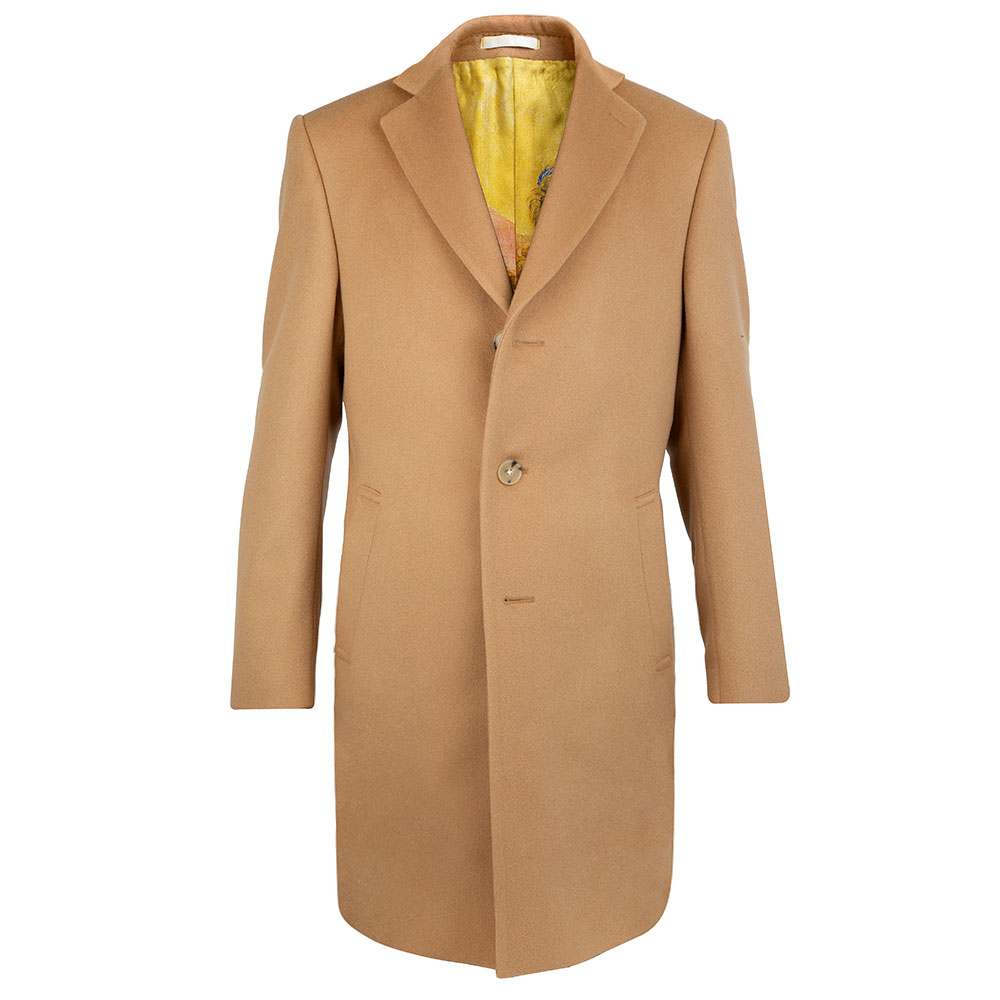 Camel Wool Overcoat
£1,595
Camel Wool Overcoat
£1,595
 Navy, Green & Gold Medallion Madder Silk Tie
£155
Navy, Green & Gold Medallion Madder Silk Tie
£155
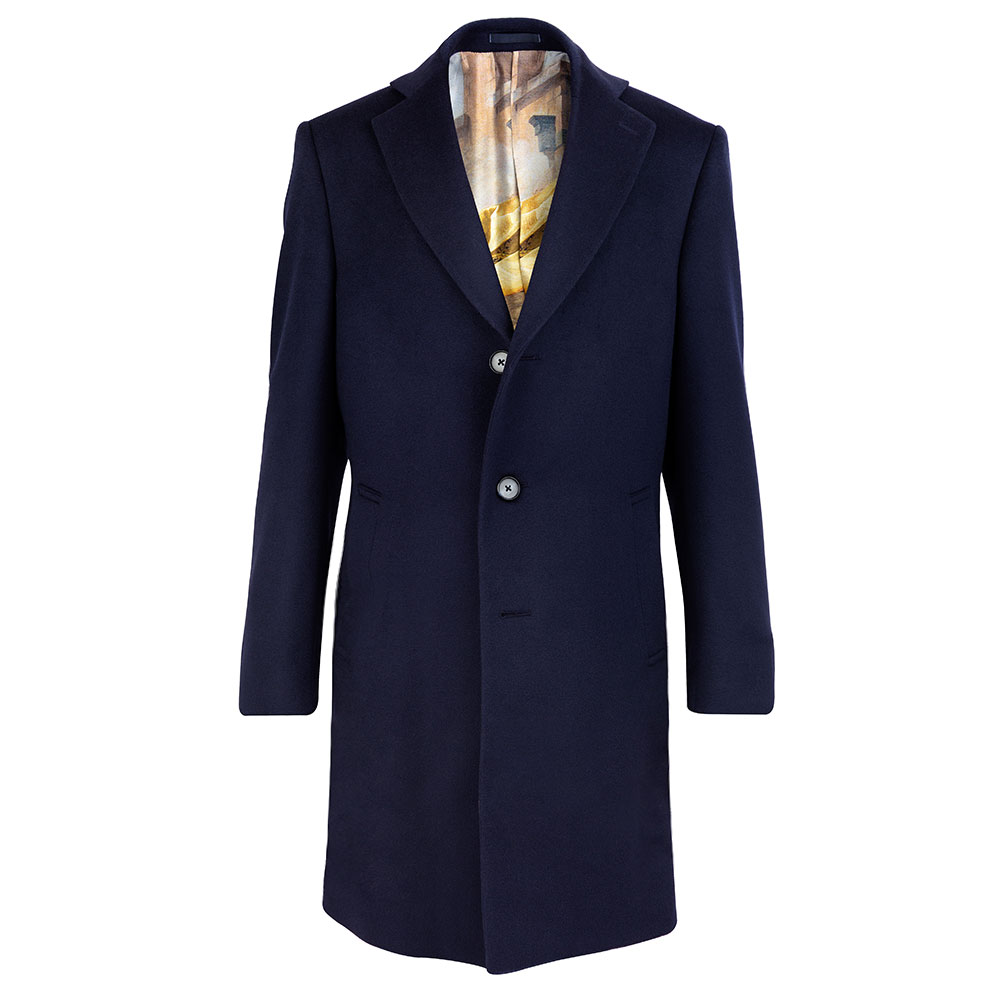 Navy Wool Overcoat
£1,595
Navy Wool Overcoat
£1,595
 Navy & White Stripe Shantung Silk Tie
£155
Navy & White Stripe Shantung Silk Tie
£155
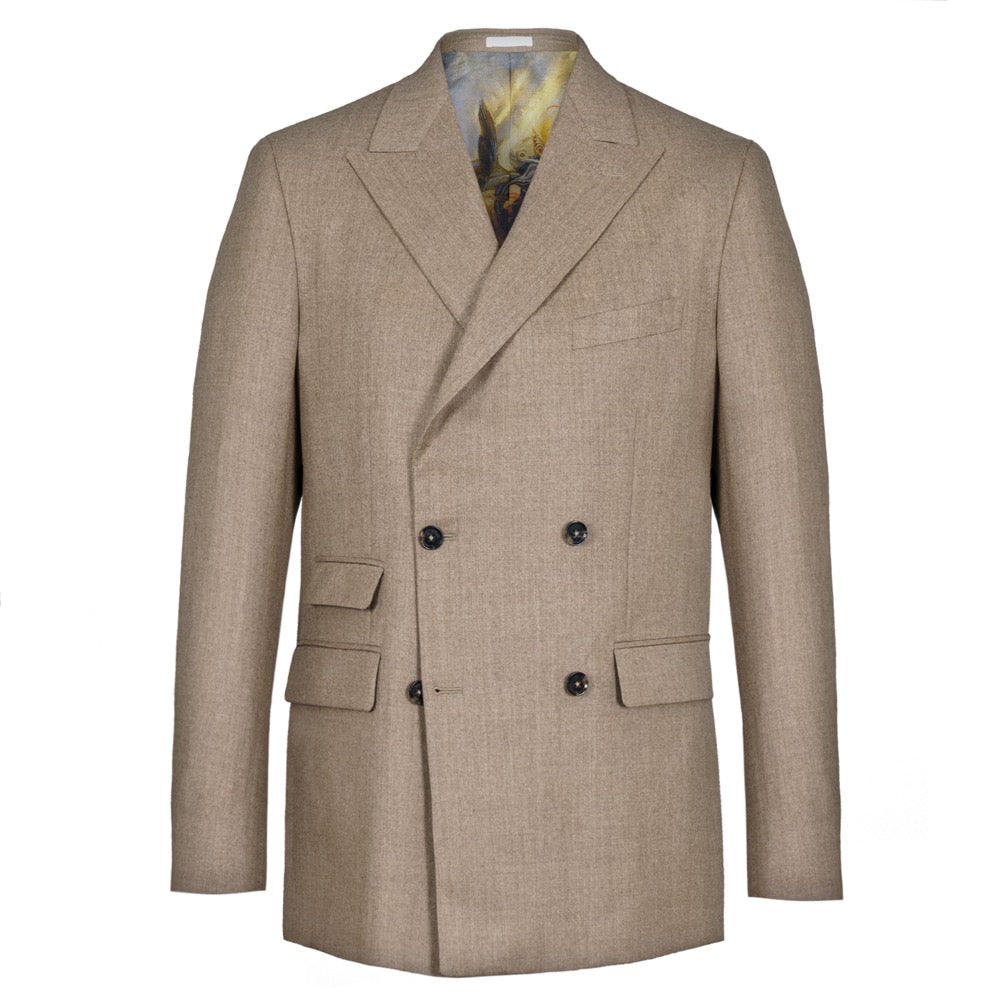 Beige Double-Breasted Jacket
£1,295
Beige Double-Breasted Jacket
£1,295
 Red & Blue Medallion Madder Silk Tie
£155
Red & Blue Medallion Madder Silk Tie
£155
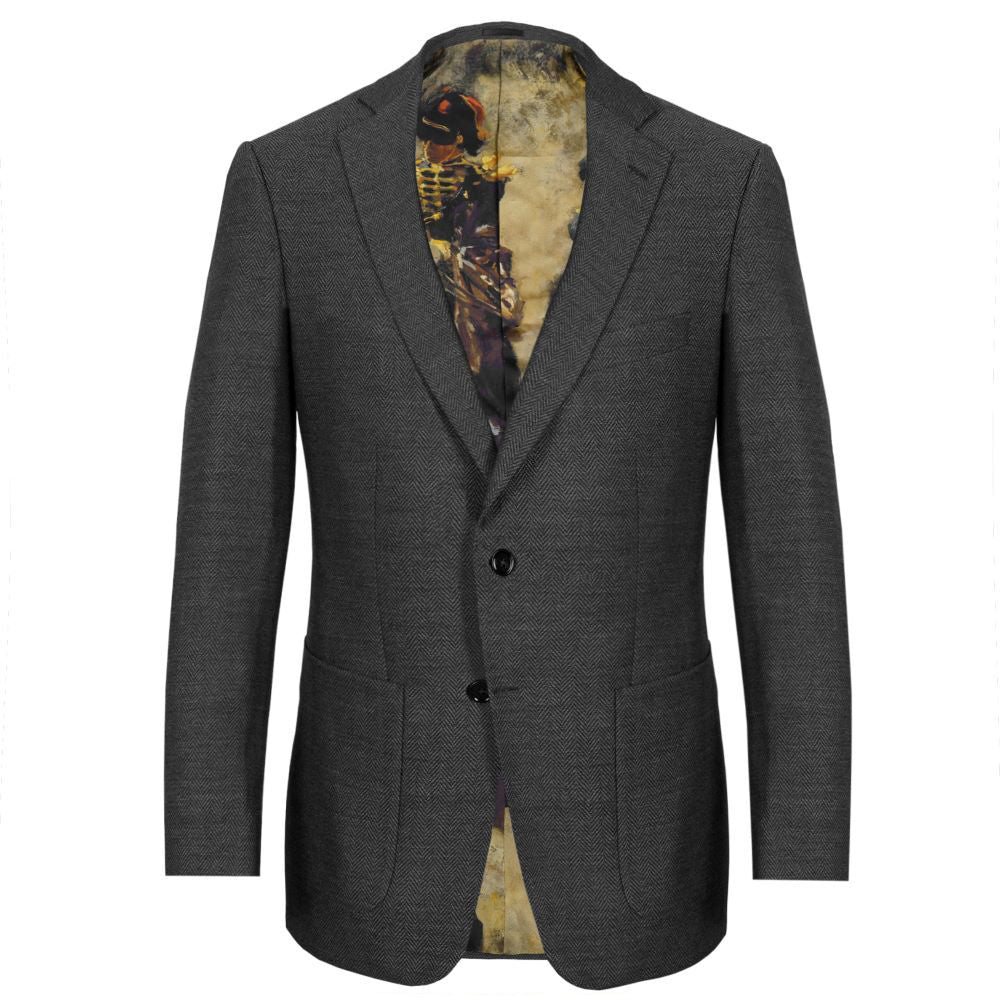 Mid-Grey Herringbone Merino Wool Jacket
£1,195
Mid-Grey Herringbone Merino Wool Jacket
£1,195
 Bronze Shantung Silk Tie
£155
Bronze Shantung Silk Tie
£155
For more styling tutorials, subscribe to our channel
Subscribe to Our ChannelA Wardrobe Essential
Why a Tailored Overcoat Is Not Optional if You Wear Suits in Winter
You can wear a good suit for years and still be dressing badly for roughly a third of the year, because the coat you put over it undoes all the work. A parka does a fine job of keeping the rain off. It does nothing at all for the jacket underneath it, which is rather the point of having the jacket. If you dress in tailoring with any regularity and you live somewhere the temperature drops below what a raincoat can handle, the overcoat is not a luxury purchase. It is the last piece of the outfit, and the one most people forget to budget for.
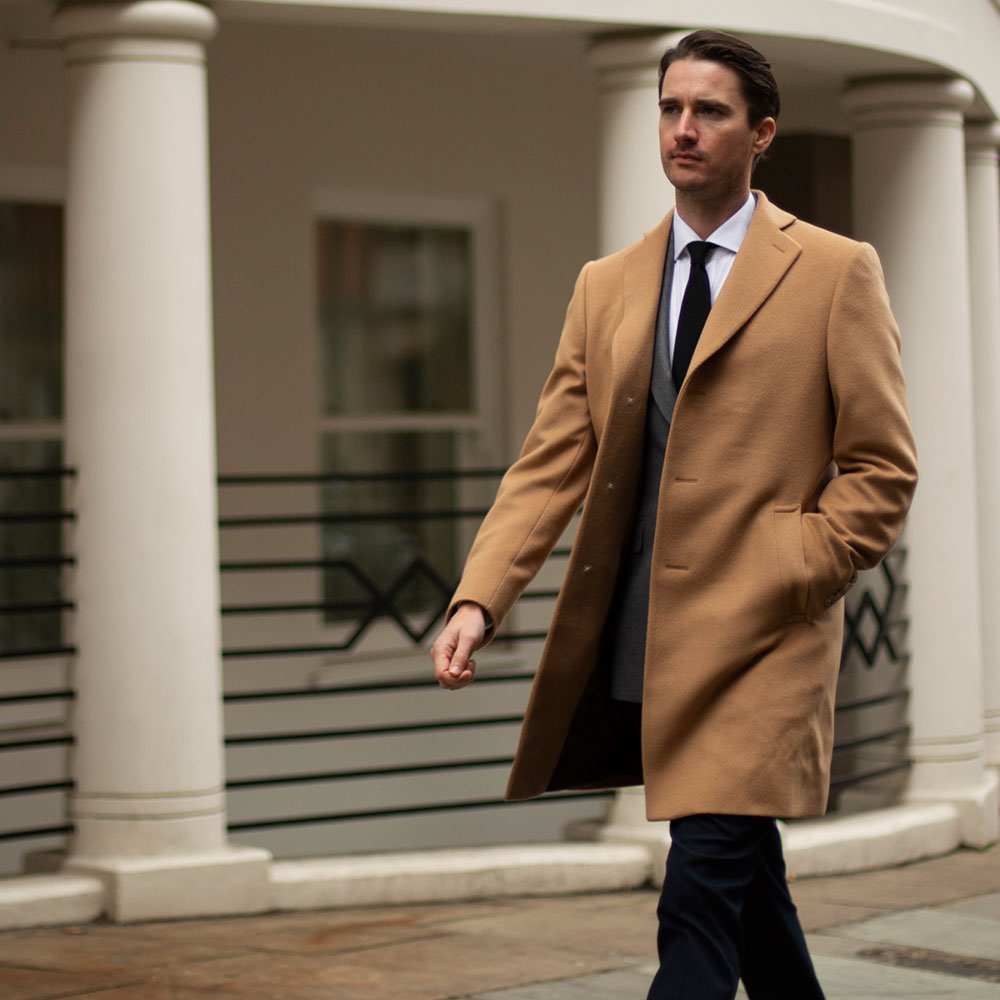
The starting point, sensibly, is something plain. Navy, mid grey and camel are the three colours worth knowing, because each behaves like a neutral. They sit happily over a suit, equally happily over a blazer or a sports jacket, and none of them fights with what is underneath. What has changed over the last decade is the expectation that an overcoat only earns its keep in formal contexts. A well-built camel coat, cut with the shape and detailing of a proper Chesterfield but finished with softer, less formal pockets, will do a Monday board meeting and a Saturday lunch with equal conviction. That kind of range used to be rare in outerwear. Now it is close to essential.
The Second Coat
Should Your Second Overcoat Be a Raincoat or Something More Interesting?
Once the first coat is settled, the obvious next move is something waterproof, and there is no argument against a good raincoat. But the second coat is also the point at which the wardrobe stops being sensible and starts being interesting, and it is worth pausing there rather than rushing straight to function. Anyone who remembers menswear departments from twenty years ago will remember the overcoat rail too: a sea of navy single-breasted Chesterfields, a scattering of double-breasted versions, and beige raincoats at the end. It was not a section that invited curiosity.
A true Chesterfield, for the record, means something specific: a set-in sleeve, notched lapels, a fly front concealing the buttons, flapped pockets, and usually a long centre vent at the back. It is the reference point from which most classic overcoats, this one included, are drawn. But reference points are for departing from once you know them, and the details that have quietly gone missing from most modern overcoats, turned-back cuffs, half belts, back pleats, more expressive pockets, are exactly what turn a coat from correct into memorable.
Choosing Your Moment
When Is the Right Time to Buy a Statement Overcoat?
There is a moment in most men's wardrobe building where the instinct is to reach for something bold: a loud suit, a heavy tweed jacket, something with a story attached. It is worth resisting that instinct and putting the drama into the coat instead. A statement overcoat earns its name two ways. It carries genuine detail: cuffs, back pleats, interesting pocket construction, the things that give a coat a silhouette rather than a shape. And it is cut from a cloth that is visually alive rather than merely present.
An Italian wool-alpaca blend is a strong argument for this second category. Alpaca fibre is hollow, which gives bulk and warmth without the weight that made the great coats of thirty or forty years ago such a chore to wear. Those older coats were beautiful and also exhausting, built for a world with harsher winters and less indoor heating than the one most of us live in now. A lighter, livelier cloth does the job better in 2026 than a heavier one ever could, and it wears its texture, flecked yarns, warm threads running through cooler ones, in a way a flat, dead-toned coat never will.
These coats also solve a specific problem that comes up constantly with weekend dressing. Get one right and it removes almost all the thinking from smart-casual: dark jeans, boots, a chunky knit, and the coat does the rest of the work a bomber jacket never could, for no more effort than putting on the bomber jacket in the first place. The colour variation in the cloth is doing a lot of that work, giving the outfit a sense of depth that a plain navy or grey coat, worn the same way, simply will not produce.
Buttoning Correctly
What Are the Rules for Buttoning an Overcoat?
The rules borrow directly from jacket etiquette, with a little more latitude for the cold. On a three-button coat, the middle button is the one to fasten if you are doing the coat up at all, with the top button as a second option on genuinely cold days. The bottom button, as with a jacket, stays undone. It is more comfortable, allows better movement, and does nothing useful when fastened.
Double-breasted coats follow the same logic with slightly more hardware. A six-button double-breasted coat is cut so that all six can technically be fastened, but the top button alone will usually give you the warmth and security you need without turning the coat into armour. Leaving the lower buttons open keeps the coat comfortable for walking and stops it reading as overly buttoned-up. The governing principle throughout is pragmatism rather than ceremony: be warm, be comfortable, and let the coat do its job.
Styling in Practice
How to Wear an Overcoat With Casual Clothes
The coat that photographs best over a suit is rarely the coat that earns its keep day to day. A camel overcoat worn over a washed denim shirt, cord trousers or chunky flannels, and suede boots is an autumn combination that looks considerably more effortful than it is, and that gap between apparent effort and actual effort is most of what good dressing is. It reads as smart-casual without tipping into costume, appropriate for a restaurant that expects a little consideration without demanding a jacket underneath.
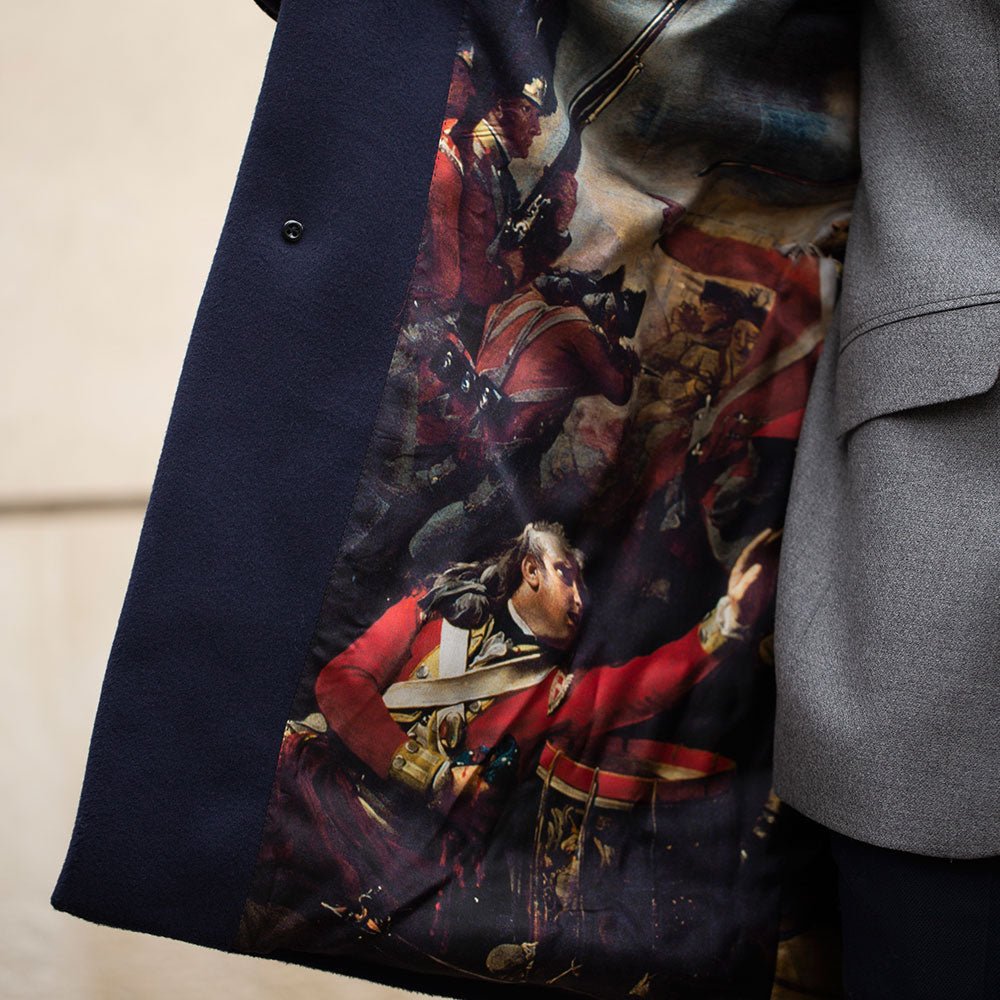
A statement overcoat with genuine texture and detailing takes this further still. Worn over a fine merino polo shirt and dark jeans, with polished Chelsea boots and, if the day calls for an extra layer, a plain cashmere scarf, it becomes a complete outfit rather than an accessory to one. A knitted polo underneath a navy overcoat is a particularly useful trick for those in-between days that are too warm for a jumper and too cool for an open collar. It photographs like effort and behaves like comfort, which is precisely the trick a good coat is supposed to pull off. The pockets do quiet, practical work here too. A coat with real, well-cut pockets solves the modern problem of where to put a phone and wallet without stretching jeans out of shape, and that is worth more in daily wear than any amount of decorative stitching.

Why Fabric Matters
What Fabrics Are Best for an Overcoat?
Lambswool and cashmere are the two names you will meet most often, and it is worth understanding what separates them beyond price. Cashmere is genuinely beautiful, and genuinely expensive, and getting more expensive still. A cheap cashmere overcoat is close to a contradiction in terms; the fibre needs to be good quality to be worth the compromise on durability that thinner cashmere always brings, so a wool-cashmere blend from a proper mill will usually outlast a poor cashmere coat several times over.
Camel hair deserves its reputation as a serious overcoat fabric in its own right, not simply because of the colour it is named for. It has body, drapes with real intention, and photographs beautifully against detailing that would disappear into a darker cloth: turned-back cuffs, flapped chest pockets, an interesting back. The back of an overcoat, in fact, is where the more considered coats separate themselves from the merely correct ones. A back pleat, a buttoned vent, or a half belt gives the coat a three-dimensional quality that pays off the moment you turn to leave a room.
Classic tweeds are worth a mention too, since they are often overlooked in favour of a hacking jacket or a tweed sports coat. For anyone building a wardrobe around heavier country tweeds, an overcoat is frequently the more useful investment than another jacket, since it will see more weathers and more occasions. Bespoke and made-to-measure customers in particular will find their overcoat bunches carry some of the most interesting heavier tweeds available, often more interesting than the lighter jacketing versions of the same cloth.
Getting the Fit Right
How Long Should an Overcoat Be and How Should It Fit?
Length and sleeve length are where most off-the-peg overcoats go wrong. The coat needs to be long enough to properly cover a suit jacket or blazer, and the sleeves need to clear the jacket sleeve underneath with room to spare. A coat that rides up over the jacket hem defeats the purpose of wearing a coat at all, since the whole point is protecting what is underneath it. This is one of the clearer arguments for a considered fit over a rack size: an overcoat with the wrong proportions looks wrong in a way that is difficult to disguise, however good the cloth.
The shoulder and sleeve head matter for the same reason a jacket's do. A structured shoulder with a defined sleeve head gives the coat its silhouette, and that silhouette is largely what separates a proper tailored overcoat from something bought off a peg with no particular intention behind it. Get the proportions right once, and the coat becomes the kind of purchase you make once every several years rather than one you keep second-guessing.
Pairing an Overcoat With a Double-Breasted Jacket
A double-breasted jacket underneath a tailored overcoat is a smarter combination than it sounds, and considerably less bulky in practice than most people assume. A beige double-breasted jacket, worn with a patterned silk tie in a warm medallion print, gives a navy or camel overcoat something to sit over that is not simply another block of neutral colour. The double row of buttons reads clearly even under a coat, and the contrast between a pale jacket and a darker overcoat is a quiet, easy way to add depth to an outfit that could otherwise disappear into itself.
Longevity and Care
Do Overcoats Last Longer Than Other Tailoring?
Overcoats have an unusual advantage in the wardrobe: they only work for roughly half the year, which means half the year is spent resting on a proper hanger rather than absorbing wear. Looked after properly, brushed regularly and hung correctly between outings, a well-made overcoat can comfortably last the better part of a decade, and it improves as it goes. The cloth softens, the coat becomes more clearly yours rather than a garment you happen to own, and the years of wear read as character rather than damage.
This is also the argument for buying carefully rather than quickly. A coat you plan to wear for years is worth the extra consideration on cloth, cut, and detail that a coat you plan to replace in two winters is not. Start plain if this is a first overcoat. Once the fundamentals of a smart wardrobe are settled and the appetite is there to express something a little more personal, that is the moment to consider the statement piece rather than the safe one. The same logic applies underneath the coat, incidentally. A mid-grey herringbone jacket paired with a bronze shantung tie is a similarly considered layer: neutral enough to sit under almost any overcoat, textured enough not to look like an afterthought.
Frequently Asked Questions
Your Questions Answered
What is the best colour for a first overcoat?
Navy, mid grey and camel are the three colours worth starting with, since all three behave as neutrals and sit comfortably over suits, blazers and sports jackets alike. A camel coat is worth particular attention as a first purchase, since it also works well in less formal contexts, extending its use well beyond strictly tailored dressing.
What makes an overcoat a Chesterfield?
A true Chesterfield has a set-in sleeve, notched lapels, a fly front that hides the buttons, flapped side pockets, and typically a long centre vent at the back. It is the classic reference point for English tailored overcoats, and the foundation most modern versions, however detailed, are built from.
Should you button up an overcoat the same way as a jacket?
Broadly, yes. On a three-button coat, fasten the middle button, or the top button on colder days, and always leave the bottom button undone for comfort and movement. Double-breasted coats give more choice, but fastening only the top button usually strikes the right balance between warmth and ease.
What fabric is best for a warm but lightweight overcoat?
A wool and alpaca blend is a strong choice, since alpaca fibre is naturally hollow and provides warmth without the heaviness of older, denser overcoat cloths. Good quality wool-cashmere blends are another reliable option, offering softness and durability without the fragility of lower grade cashmere.
Can an overcoat be worn casually rather than over a suit?
Yes, and a coat with genuine texture or a livelier cloth works particularly well this way. Worn over a fine knit polo shirt, dark jeans and boots, it gives a smart-casual outfit far more polish than a bomber jacket or parka, with no additional effort involved in the styling.
How long should a well-fitted overcoat last?
A well-made overcoat, cared for properly with regular brushing and correct storage on a proper hanger, can comfortably last the better part of a decade. Because overcoats are only worn for around half the year, they tend to age more slowly than other tailoring, softening and developing character rather than simply wearing out.
To view the full collection click on the button below.