Why Brown Is the Most Underrated Colour in Tailoring
Brown is the colour most people walk past on the way to navy. Yet learn to wear it well and your wardrobe begins to feel grown up, considered, and quietly your own. In this video we make the case for brown, from the first sports jacket to the unexpected pleasure of a brown dinner jacket.
Shop the Video
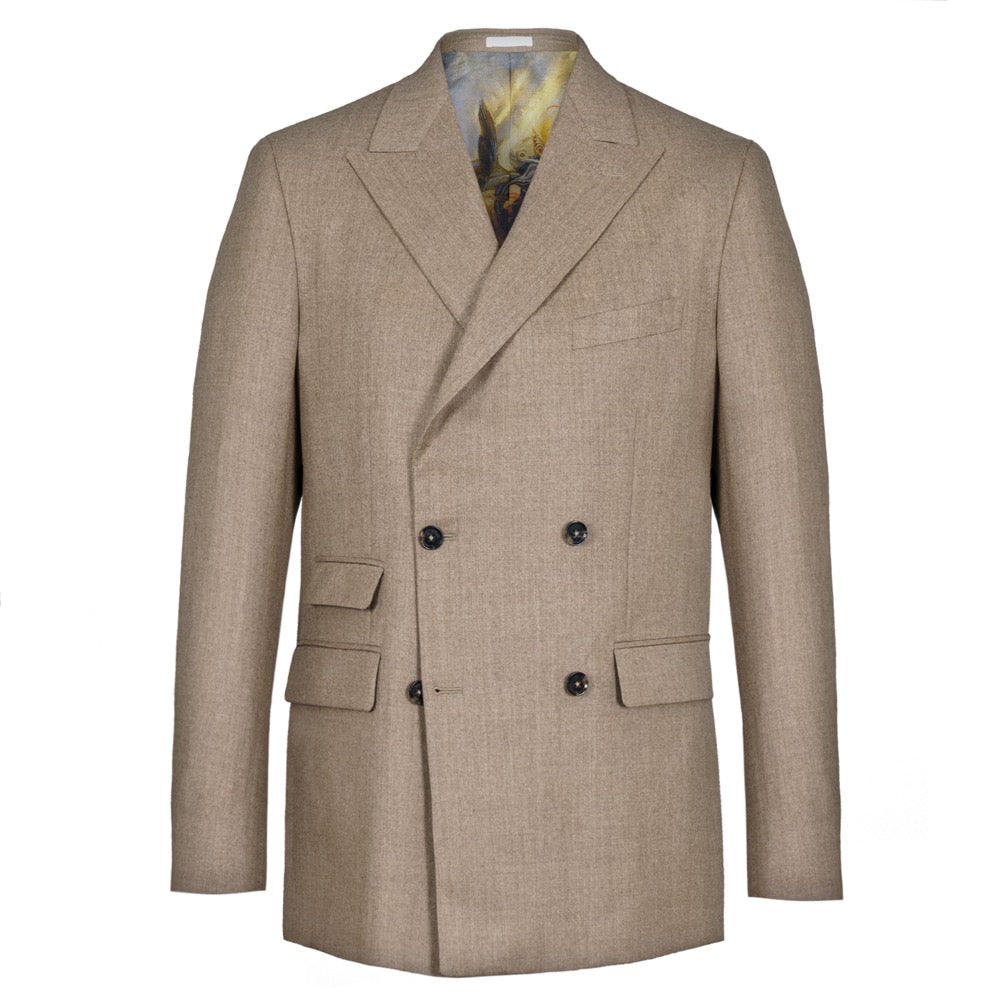
 Dark-Brown Hopsack Wool Blend Jacket
 Midnight Blue Knitted Wool-Cashmere Blend Tie
 Steel Blue & Green Madder Silk Pocket Square
 Chestnut-Brown Hopsack Wool Blend Jacket
 Brown & Ocean Blue Stripe Shantung Silk Tie
 Manocchi Pink & Yellow Ochre Rosette Pocket Square
 Camel Wool Overcoat
 Heathered Oxblood & Ivory Stripe Silk Blend Tie
 White & Burgundy Contrast Trim Linen Pocket Square
 Balmoral, Navy Pocket Square
 Classic Silk Bow Tie
For more styling tutorials, subscribe to our channel
Subscribe to Our ChannelWhy Brown Is the Colour That Belongs to Men Who Dress for Themselves
There is a quiet confidence to the man who wears brown well. While the rest of the room gravitates toward navy and charcoal, he has made a deliberate choice: one that signals not corporate necessity, but a genuine understanding of cloth, colour, and how the two behave together. When building a classic wardrobe you tend, quite reasonably, to lean on blues and greys. They are the well-behaved neighbours of tailoring. They do not knock on the door at odd hours. They turn up to work, sit through the meeting and get the train home. If you happen to earn your living in law or finance, or any of those traditional houses where the dress code is written in invisible ink and policed by raised eyebrows, you stick with them and nobody is the worse for it.
Outside that careful little world, however, brown is doing a great deal of quiet heavy lifting that nobody seems to credit it for. It is the colour you notice on a man whose clothes look as if they actually belong to him, rather than to a uniform issued at the door. It does not demand attention. It earns it by simply turning up looking better than expected. To see brown done well on someone is, to the experienced eye, a small clue that you are looking at a sophisticated dresser: one who is dressing for himself rather than for the rulebook.
Why Brown Tailoring Needs Texture and Pattern to Work
Here is a small truth that took a while to put into words. Navy can be flat and still elegant. Brown cannot. Brown wants light and shade running through it, the way a good landscape wants weather. Hand it a single, dead, biscuit tone and the colour sulks at you from the rail. Give it a mélange, a hint of warm thread arguing with a cooler one, and the whole thing lifts off and becomes interesting.
This is why brown belongs to the winter cloth merchant. Run your fingers through any decent flannel bunch and you find brown chalkstripe, brown houndstooth, brown Prince of Wales check, each of them quietly more interesting than its grey cousin. The colour was made for pattern. Pattern was made for the colour. The marriage is old and the marriage is happy.
One word of warning before you set off in pursuit of it. You will not find these cloths waiting for you on the high street. Brown does not translate into entry-level tailoring the way blue and grey do, and good high street brown suits are about as common as honest weather forecasts. If you want a proper brown flannel suit, the road leads to bespoke or at the very least made to measure. The deep chocolates, the ones that pay back the most, almost always need to be commissioned. Consider that part of the cost of admission to a club worth joining.

Look One: Begin with the Brown Sports Jacket
If a brown suit feels like a leap from the springboard, a brown sports jacket is the very civilised first step down the ladder. Think of it as a change of pace from your trusty blue blazer: the sort of garment that introduces a bit of grown-up variety into the rota without anyone calling the fashion police. Brown is, of course, perfectly familiar in country tailoring, where Harris tweeds and Donegals have flown the brown flag for the best part of a century. So if you wear tweed you have already proved the principle to yourself. You just did not know you were doing it.
The reassuring thing about a brown jacket is that almost every shirt and tie you already own for your blues and greys will work happily against it. A blue Bengal stripe shirt with a dark navy knitted tie sits beautifully against a dark brown jacket, and a pocket square with a complementary blue and green tone ties the whole arrangement together without trying too hard. It is a sophisticated, grown-up way of dressing that does not announce itself across the room.
What trousers with a brown jacket? Mid grey flannel: the most useful trouser ever made, as happy with brown as it is with dark blue. Add a chambray shirt to a chestnut jacket and you have a combination worth reaching for more than almost any other. For something with a little more spine, try dark navy trousers under a brown jacket, with brown shoes to draw the eye through the outfit. Come spring, cream trousers in gabardine or a lightweight cavalry twill make for a lovely change of pace. Anyone nervous about brown should also remember they almost certainly own brown shoes already: the suede loafers and the chukka boots that have been quietly looking for a brown jacket all along.
Choosing Your Shade: From Tobacco to Deep Chocolate
Not all browns ask the same thing of you, and understanding the difference between the lighter and deeper ends of the spectrum is what separates a considered choice from a tentative one. Lighter browns, camel, beige, tobacco, are more immediately versatile and sit closer to a neutral. They integrate naturally with a wardrobe built around blues and greys, and they are considerably easier to find well-executed in ready-to-wear. If brown is new territory for you, this is where to begin.
Darker browns ask a little more, but give a great deal in return. The deep chocolates and rich chestnuts have a presence that the lighter shades cannot match, and in the right cloth they are simply one of the most distinguished things a man can wear. There is a particular shade that Italians sometimes call a charcoal brown: a mélange in which traces of grey and even black run through a predominantly brown cloth. This is where the black shoe question becomes interesting. Most brown cloths and black shoes do not agree. But in a charcoal brown, where the undertone meets the shoe halfway, the combination reads as genuinely sophisticated. Look at fashion plates from the 1930s and you will find it worn with real elegance and frequency. Reach for it on a warm tobacco brown and it looks merely puzzled. Know your cloth and choose your moment.
Look Two: Tobacco Brown for Summer
At the height of summer, when linen comes out of the cupboard and everyone reaches for sand, cream, and safe French blue, tobacco brown is an under-loved trick. It works beautifully as a linen suit, equally well broken up into separates, and it has just enough formality to walk into a summer wedding without apology while still relaxing into a holiday lunch when required. A tobacco linen jacket over white trousers with a soft blue shirt is a combination that will outlast most of what the season throws at it.
Brown, being less common than navy or grey, draws a fraction more attention. A so-so blue suit lets you slip past the room. A so-so brown suit invites the room to take a second look. Which means fit matters more in brown than in almost any other colour. Commission it properly. Get the shoulders right, get the length right, get the trouser break right. The colour rewards that effort more visibly than navy ever will, and it is another argument for going bespoke or made-to-measure when you do invest in brown tailoring. You are already going off the beaten path to find the cloth. It is worth the further step of ensuring it is made properly.
Look Three: The Case for a Camel Overcoat as Your First Brown Investment
The first overcoat is a different matter from the first suit, and here brown has a serious claim that most people overlook. The camels, the biscuits, the warm beiges are extraordinarily versatile pieces of outerwear, and for a specific reason: they contrast rather than coordinate. A camel overcoat worn over a navy suit reads as deliberate and considered. The same coat over charcoal grey is equally strong. Over dark jeans and a grey cashmere crew neck it is entirely at home. A dark navy overcoat over a navy suit, or a grey coat over grey trousers, risks looking flat and unintentional, as if the coat were simply more of the same rather than a considered addition to the outfit.
There is a further, quieter reason camel works so well as outerwear. The colour shows off detail. Side-welted pockets, flapped breast pockets, ticket pockets, turnback cuffs: all the small flourishes that make a coat feel properly considered are easier to read against camel than against the deeper blues and greys, where they can disappear into shadow. If you are going to pay for the craftsmanship you may as well let people see it.

Look Four: Brown in the Field
Brown is just as obliging in the less formal outerwear corner. A linen blend field jacket in a cool, darkish brown, the sort that has texture you can almost hear when you run a hand over it, looks excellent with dark denim or white cords, a chunky knit, a pair of chukka boots. A chambray shirt underneath keeps the combination grounded and easy. It is a smart weekend in one garment, and like the camel overcoat it ages handsomely rather than tiredly. The natural home for these pieces is the tailored jackets collection.


Look Five: Brown in the Evening, and Why Noël Coward Was Right
This is the corner of the brown argument that surprises people most, so we have saved it for last. Evening wear belongs, in the popular imagination, to black and midnight blue. Both are excellent. Both are also, after a few hundred dinners, slightly predictable. Brown is the genuinely interesting third option, and it has a quieter pedigree than most people realise. Noël Coward famously had a shawl collar brown dinner jacket made for him: the sort of thing that turned heads in a room of black tie precisely because it did not try to.
If velvet is more your kind of glamour, the smoking jacket repertoire runs to bottle green, burgundy, claret and the occasional plum. Add a deep brown velvet with or without black trim and you have a piece that is faintly more modern than the usual suspects while reading every bit as elegant. The same logic applies to a full brown dinner jacket, which does need to be made to measure since you will not find one hanging on a peg anywhere sensible.
A chocolate brown mohair cocktail jacket, something that lives between a blazer and a proper dinner jacket, is a piece worth commissioning. It carries most of the evening signatures: a single button closure, peak lapels, jetted pockets, a turnback cuff, no facing, and a wool and mohair blend with a thread of black running through it. Worn with a black tie and straight black evening trousers it looks excellent. Worn with a browny green tartan it looks mischievous in the right way. Worn with navy trousers and a navy crew neck for a smart summer dinner it works rather better than it has any right to. Our Black Tie collection is the place to start if you want to test the water before commissioning.

So, Have We Convinced You?
Brown is not the first colour you reach for, which is precisely the point. It rewards the person who pays attention, who cares about texture, who notices a chalkstripe and stops to look. It dresses you up in the evening, dresses you down at the weekend, and quietly improves almost every blue and grey item already living in your wardrobe. Start with a jacket. Move on to an overcoat. Consider, when the moment arrives, a dinner jacket that nobody else in the room is wearing. Once you have learnt to wear brown, going back feels a little like turning down the colour on the television.
Frequently Asked Questions About Wearing Brown in Tailoring
Why is brown considered an underrated colour in tailoring?
Brown is less visible in entry-level tailoring and less common in conservative professional dress codes, which means most people never develop a relationship with it. This is precisely what makes it interesting. When you see brown worn well, it tends to signal someone who is dressing for themselves rather than for a uniform. It also responds to texture and pattern in ways that navy and grey do not, which makes it more rewarding as a cloth choice at the higher end of the market.
What colours work best with a brown jacket or suit?
Mid grey flannel trousers are the most reliable pairing: they work with brown as well as they work with everything else. Dark navy trousers are a compelling alternative. For shirts, blue Bengal stripe, chambray, and pale blue all sit comfortably against brown. For ties, navy knitted ties, stripe shantungs, and any tie with a warm tone running through it will complement a brown jacket. Brown shoes are the natural choice, though certain brown cloths with grey undertones can take a black shoe elegantly.
Can you wear black shoes with a brown suit or jacket?
Sometimes, and when it works it is genuinely sophisticated. The key is the undertone of the brown. A charcoal brown, where the mélange carries grey and black within the overall brown colour, will meet a black shoe halfway. A warm tobacco brown will not. Look at the cloth carefully before deciding. If you can see grey in the weave, a black shoe is worth trying. If the brown is warm and straightforward, stick to brown shoes.
Is a camel overcoat worth buying?
Yes, and for many wardrobes it is a stronger first overcoat choice than navy or grey. A camel overcoat works over navy suits, grey suits, dark jeans with a knit, and almost any combination in between. It contrasts rather than coordinates, which avoids the flat, unintentional look of a dark coat over a dark suit. It also shows off construction details, ticket pockets, turnback cuffs, welted pockets, that can disappear on darker cloths. It ages well, developing character rather than just wear.
Can brown be worn for evening occasions?
Yes, and it is one of the most interesting evening choices available. A brown dinner jacket was made famous by Noël Coward and has never entirely gone away. Brown velvet is an elegant alternative to the more common bottle green or burgundy. A chocolate brown mohair cocktail jacket sits well with black evening trousers, a browny green tartan, or even navy trousers for a smart dinner. None of these are off-the-peg options, but all of them are worth commissioning if evening dressing is something you take seriously.
Where can you find good brown tailoring?
Good brown sports jackets and lighter tobacco shades are available in ready-to-wear if you look carefully. Deep chocolate browns and brown flannel suits almost always require bespoke or made-to-measure, since the cloth is not widely stocked at entry level. The Rampley & Co tailored jackets collection includes brown hopsack wool blend options that sit between the two: ready-to-wear quality without the made-to-measure wait.
Shop Brown
Ties, pocket squares, and jackets in every shade of brown; from tobacco to tawny, biscuit to chocolate.