

What to Wear to the Races
Royal Ascot has a dress code, which at least removes one decision. Most other race meetings in Britain do not, which means the whole thing falls on you. That is not a problem. You are outside, in the English countryside, with nowhere particular to be until the last race. Very few occasions ask for better dressing, and fewer still make it this easy to get right.
Shop the Video
 Light-Brown Linen Jacket
£1,445
Light-Brown Linen Jacket
£1,445
 Racing Green & Bronze Madder Silk Pocket Square
£90
Racing Green & Bronze Madder Silk Pocket Square
£90
 Blue, Cream & Ecru Stripe Shantung Silk Tie
£155
Blue, Cream & Ecru Stripe Shantung Silk Tie
£155
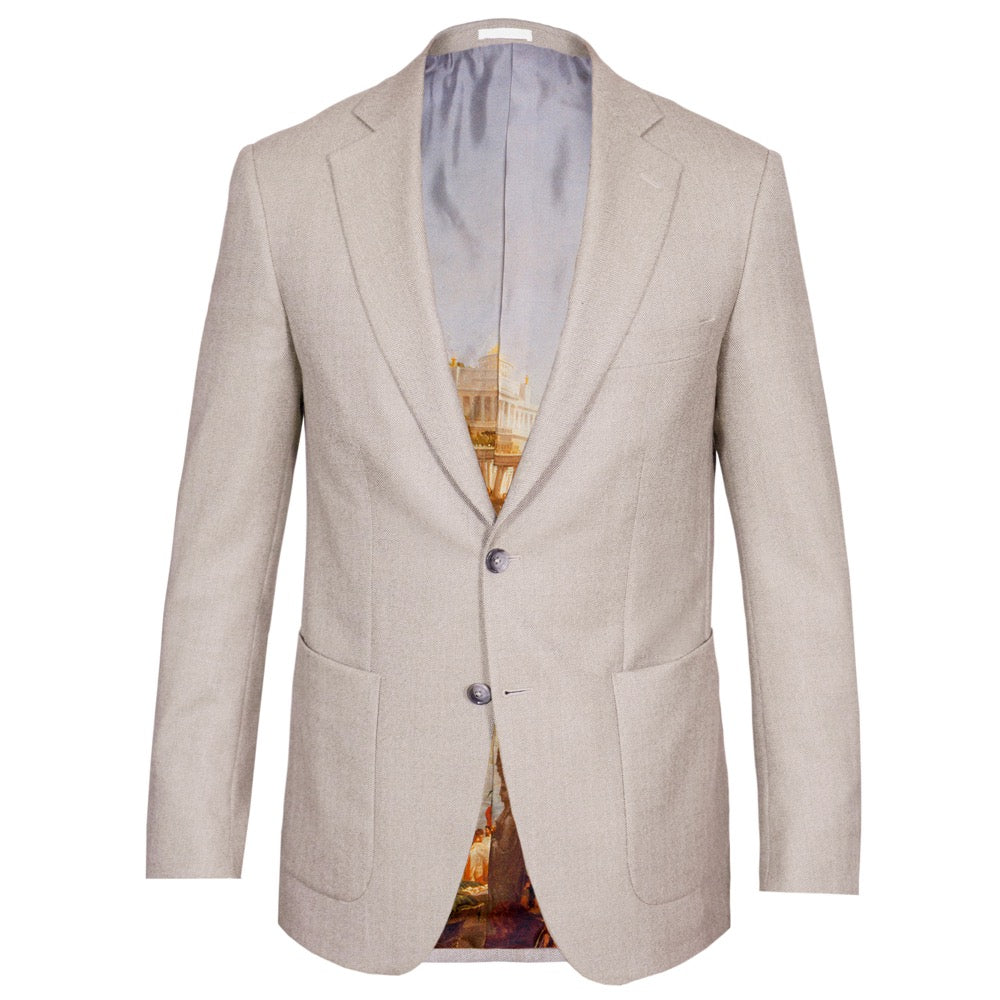 Biscuit Herringbone Wool Jacket
£1,195
Biscuit Herringbone Wool Jacket
£1,195
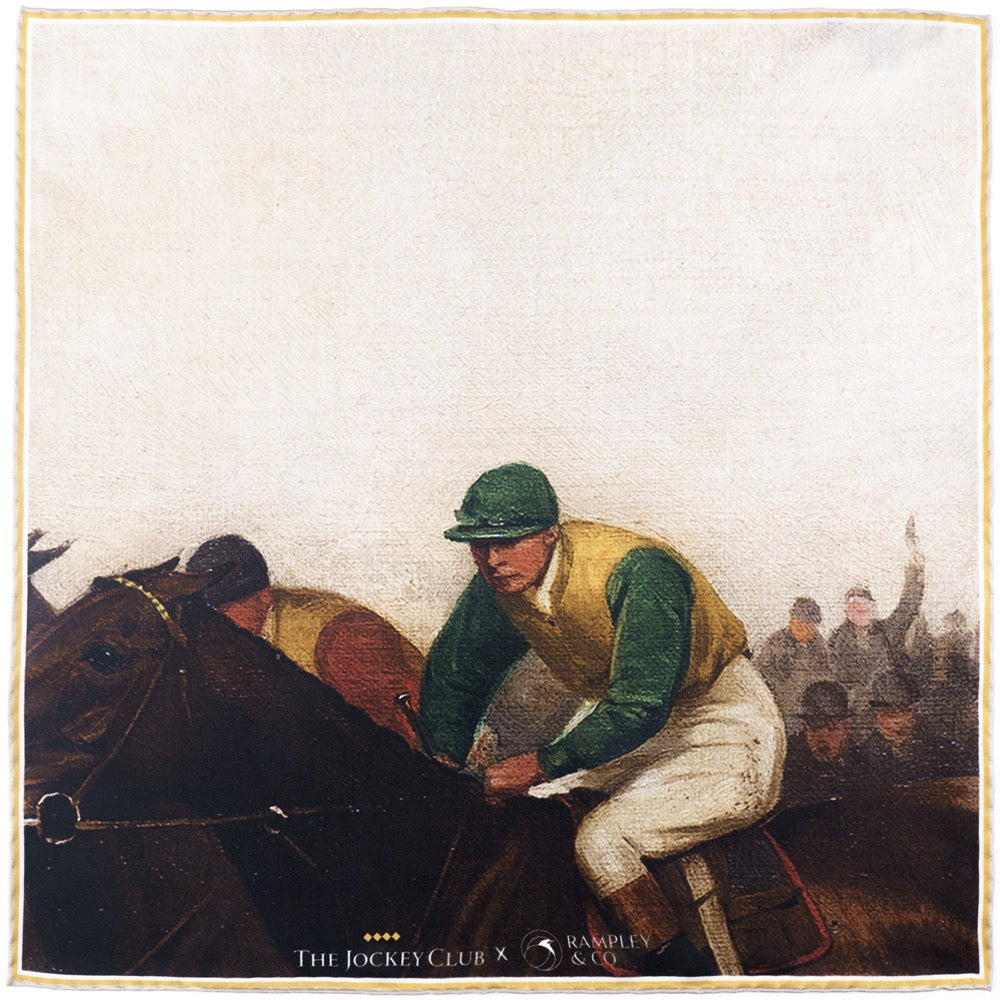 Sceptre at Newmarket Pocket Square
£90
Sceptre at Newmarket Pocket Square
£90
 Bottle Green Knitted Wool-Cashmere Blend Tie
£155
Bottle Green Knitted Wool-Cashmere Blend Tie
£155
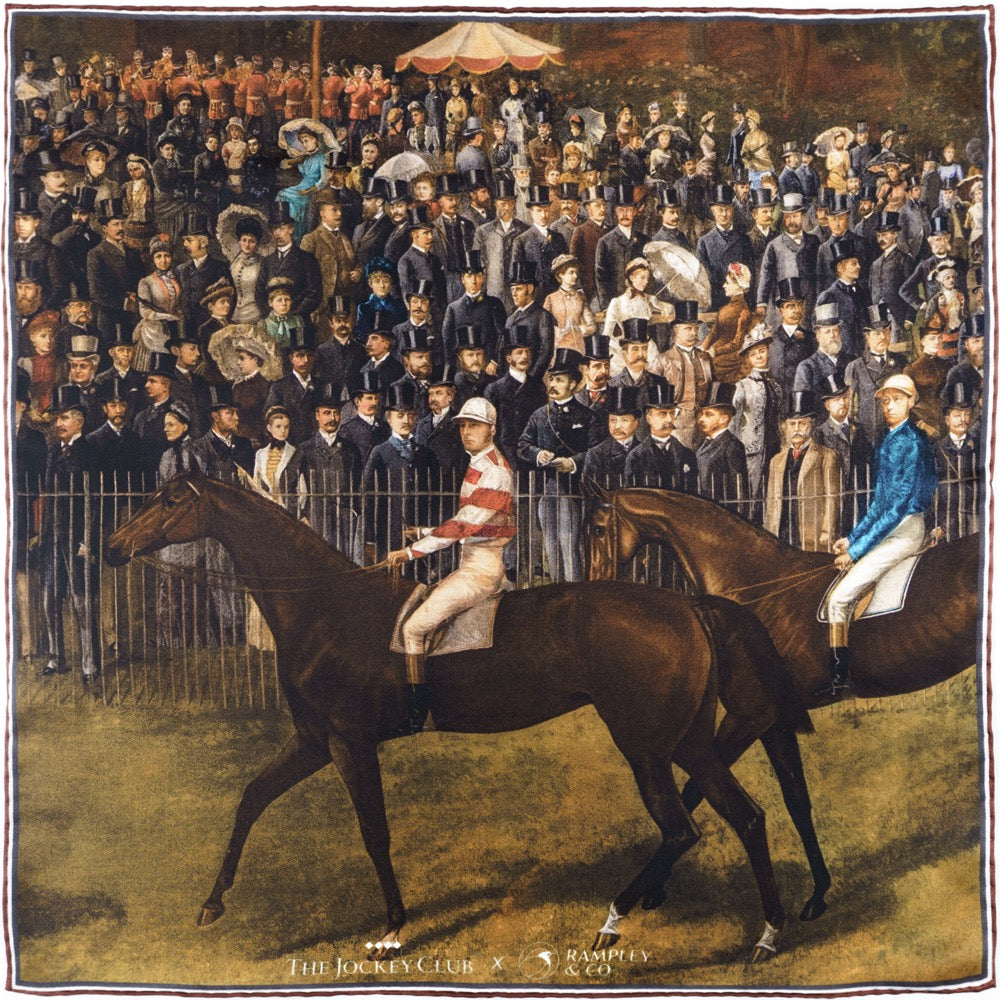 Sandown Park Lawn, 1884 Pocket Square
£90
Sandown Park Lawn, 1884 Pocket Square
£90
 Midnight Blue Knitted Wool-Cashmere Blend Tie
£155
Midnight Blue Knitted Wool-Cashmere Blend Tie
£155
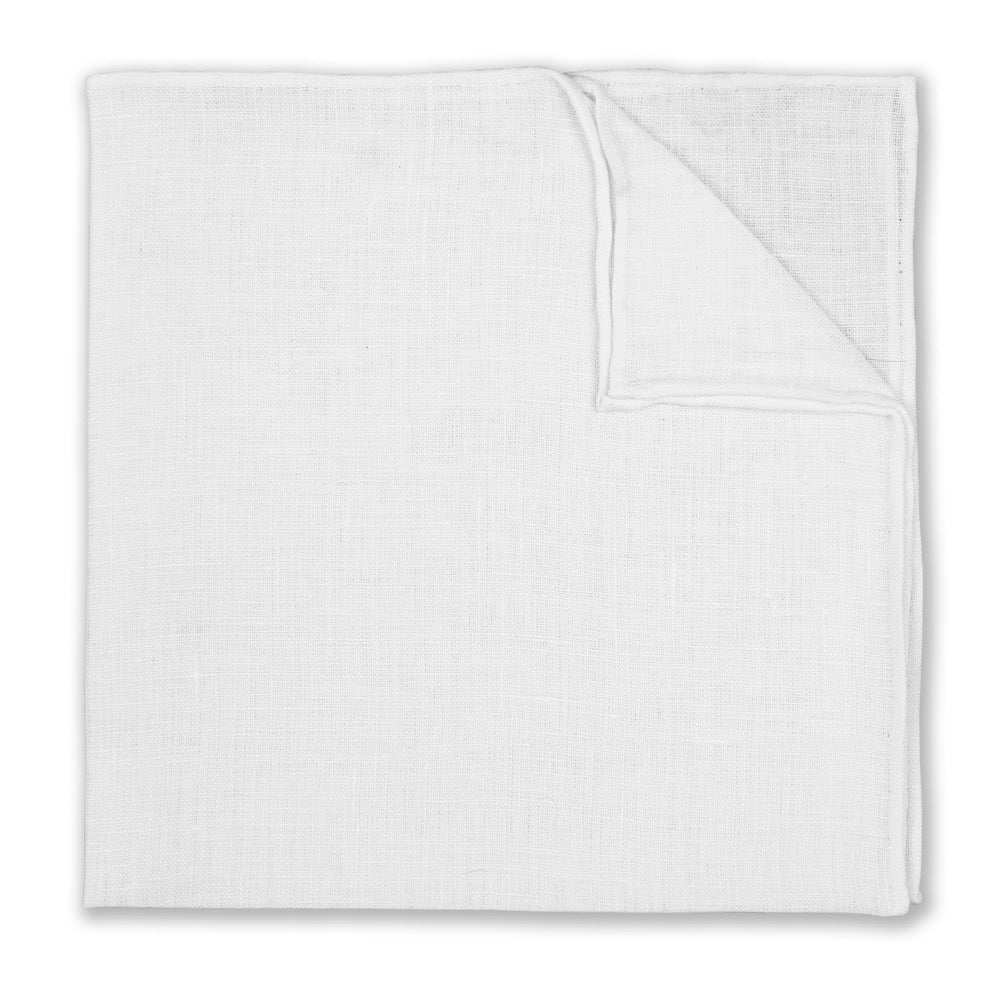 White Linen Pocket Square
£80
White Linen Pocket Square
£80
 Burnt Yellow & Blue Floral Repeat Silk Tie
£155
Burnt Yellow & Blue Floral Repeat Silk Tie
£155
For more styling tutorials subscribe to our channel
Subscribe to Our ChannelThe occasion
Why Royal Ascot and the Summer Races Reward the Man Who Has Thought About It
There are very few occasions in British life where getting dressed involves genuine freedom. Weddings have their conventions. Offices have their rules. The summer races, for the most part, have neither. Royal Ascot is the obvious exception: the Royal Enclosure requires morning dress, and there is a certain pleasure in that clarity. But the Village Enclosure at Ascot, Glorious Goodwood, Epsom on Derby Day, Newmarket in July: at these meetings the unwritten rules are the only rules, enforced not by stewards but by the eyes of everyone around you.
The setting is what guides everything. You are at a country venue, outdoors for most of the day, in English summer weather which will do what it likes regardless of your plans. The cloth and the cut that work in a city office are not the cloth and the cut that belong here. Texture, weight, natural fibre, warm tone: these are the building blocks of a good race day outfit, and they are considerably more interesting to wear than a navy business suit.
The Foundation
Why an Odd Jacket and Trousers Beats a Suit at Royal Ascot and Goodwood
The case for an odd jacket and trousers over a fixed suit is simple. A suit speaks to the city. It belongs in an office, a boardroom, a glass-and-steel building where the carpet is grey and the windows do not open. At a racecourse, particularly against the paddock and the summer landscape, it tends to look as though it has arrived from somewhere else and not had time to change.
An odd jacket does something the suit cannot: it allows texture and colour to have a conversation with each other. A linen jacket over a sharp wool trouser has a visual interest that comes directly from the contrast between the two cloths. It reads as considered in a way that two pieces of the same fabric worn together simply does not.
There is a practical argument too. An odd jacket layers. Worn over a waistcoat with a tie, it delivers as much formality as the occasion could ask for. Worn alone over an open collar, it sits perfectly well. Taken off in the afternoon sun, it allows the outfit beneath to degrade gracefully rather than abruptly. A suit, once the jacket comes off, becomes a pair of suit trousers and a shirt, which has the air of a long meeting rather than a good afternoon.
For trousers, reach for cloth that holds a shape. A quality pure wool in mid-grey or stone keeps a clean crease across a day of walking and standing. Paired with a softer linen or herringbone jacket above, the combination reads as deliberate without looking overdressed.

The Summer Meeting
What to Wear to Royal Ascot and Goodwood: The Case for Linen
For Goodwood, the Epsom Festival, Ascot in June, linen is the natural answer. It breathes. It moves well. It creases over the course of a day, and this is not a problem but a quality: linen at the end of an afternoon looks like a man who has been having a good time. The crumple has to be earned, and at the races it earns itself quickly enough.
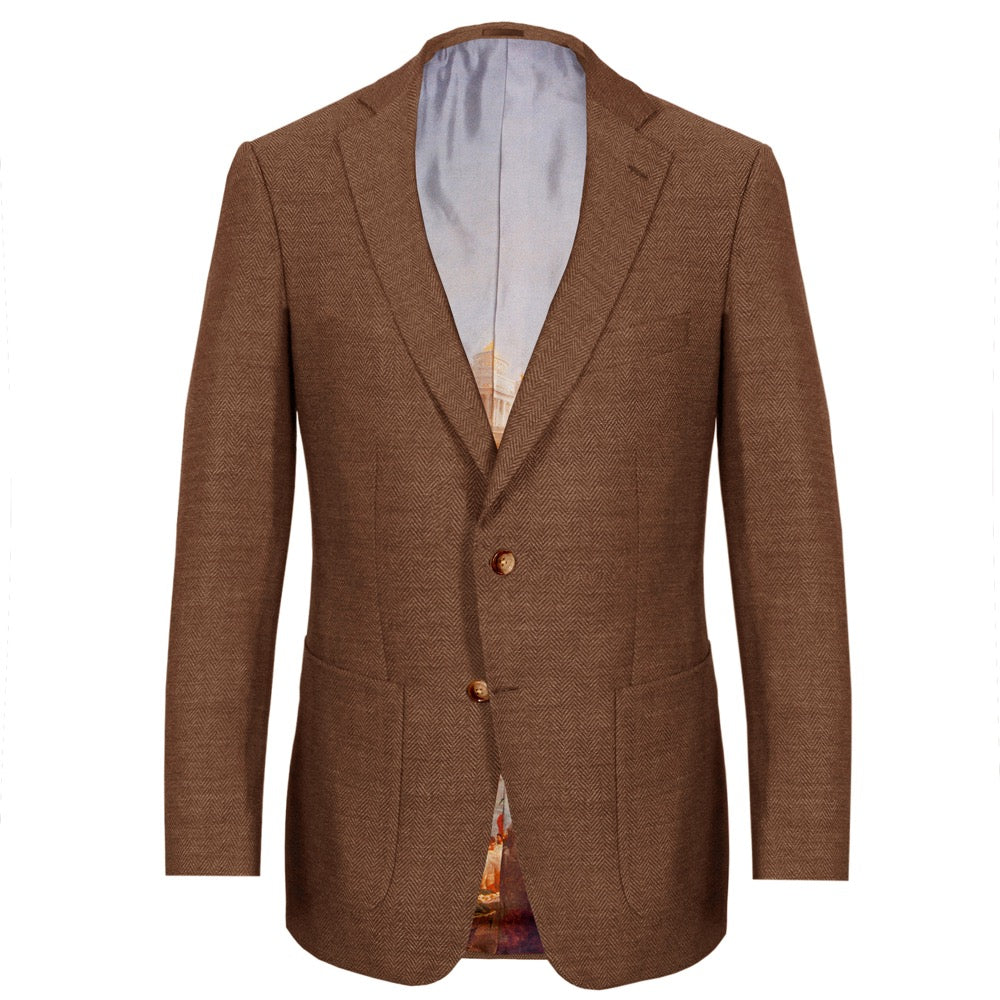
A herringbone linen in tobacco or biscuit gives you visual interest without any effort. Pair it with a plain or lightly striped shirt, well-pressed grey or stone trousers, and the foundation is already stronger than most of what you will see at the course. The jacket wants minimal structure: enough to hold its shape, not so much that it fights you after several hours in the paddock. The pockets should be functional. The cut should be easy across the shoulders.
The warm end of the linen palette sits naturally against the summer landscape, which is precisely why it has been worn at country race meetings for the better part of a century. Tobacco, sand, biscuit, pale herringbone: these are colours that belong outdoors. They pair happily with everything you already own for blue and grey jackets, and they tend to improve rather than age over the course of a long afternoon.
The Extra Layer
The Odd Waistcoat: The Single Easiest Way to Dress Up a Race Day Outfit
An odd waistcoat is one of the more useful items in a man's wardrobe, and race day is where it earns its keep most visibly. Worn over a shirt and tie, it adds a degree of formality that requires nothing else to justify it. It reads as deliberate effort without tipping into overdressing. It brings the colours of the outfit together in a way that a tie and jacket alone do not quite manage.
More practically, it is removable. When the afternoon warms up, or the walking begins to tell, it comes off and the outfit beneath it is still perfectly presentable. A jacket removed without a waistcoat makes you a man in shirtsleeves. A waistcoat removed makes you a man who has sensibly adjusted to the temperature. The difference is considerable.
An off-white or cream linen waistcoat sits naturally against warm-toned jackets: biscuit herringbone, tobacco linen, pale tweed. It introduces freshness without disturbing the palette. The tone of the waistcoat should sit in the same family as the jacket rather than matching it exactly. You are adding a note, not repeating one that is already there.
Once you have worn an odd waistcoat to the races, wearing a jacket and tie without one feels like leaving the house with something missing.
Finishing the Look
Which Tie to Wear to the Races: Why Texture Wins Every Time
The tie is where a race day outfit tends to go wrong. The instinct is often to reach for something festive: a bright woven silk, the sort of thing associated with weddings and garden parties. At a wedding it is fine. At the races it reads as not quite understanding the difference between the two occasions.
The better move is texture. A knitted wool-cashmere tie in bottle green, midnight blue, or burgundy pairs naturally with the textured cloths the races call for. Linen and knit talk to each other in a way that linen and printed silk do not, because both are textured cloths in conversation with each other rather than competing. A shantung stripe works on the same principle: not silk competing with linen, but silk with enough body and surface interest to hold its own alongside it. A blue, cream and ecru stripe in shantung is the kind of tie that sits beautifully against a warm linen jacket without trying too hard.
The colour of the tie should tone into the outfit rather than lead it. Bottle green against tobacco linen. Midnight blue against biscuit herringbone. A warm stripe against pale grey flannel. The tie at the races is the last piece of the picture. It should not behave like the first.
The Pocket Square
How to Choose a Pocket Square for Royal Ascot and the Summer Races
The pocket square follows the same logic as the tie. The occasion does not call for the most dramatic silk in the drawer. It calls for something that belongs in the picture: considered in colour, proportionate to everything around it, and made well enough to justify the position it occupies.
Madder silk is a natural choice here. Its matte chalk finish sits well against linen and tweed in a way that a glossier silk does not. The colour palette in madder silk pocket squares maps directly onto the races: racing green and bronze, burnt orange and navy, warm ochre. These are not colours invented for a brief. They are simply the colours that belong to the landscape and the cloth at the same time.
A white linen pocket square in a flat or single-point fold is the other reliable option. It works with everything, reads as appropriate at any meeting from Kempton to the Royal Enclosure, and does not require any further thought once it is in the pocket. There is something to be said for that.
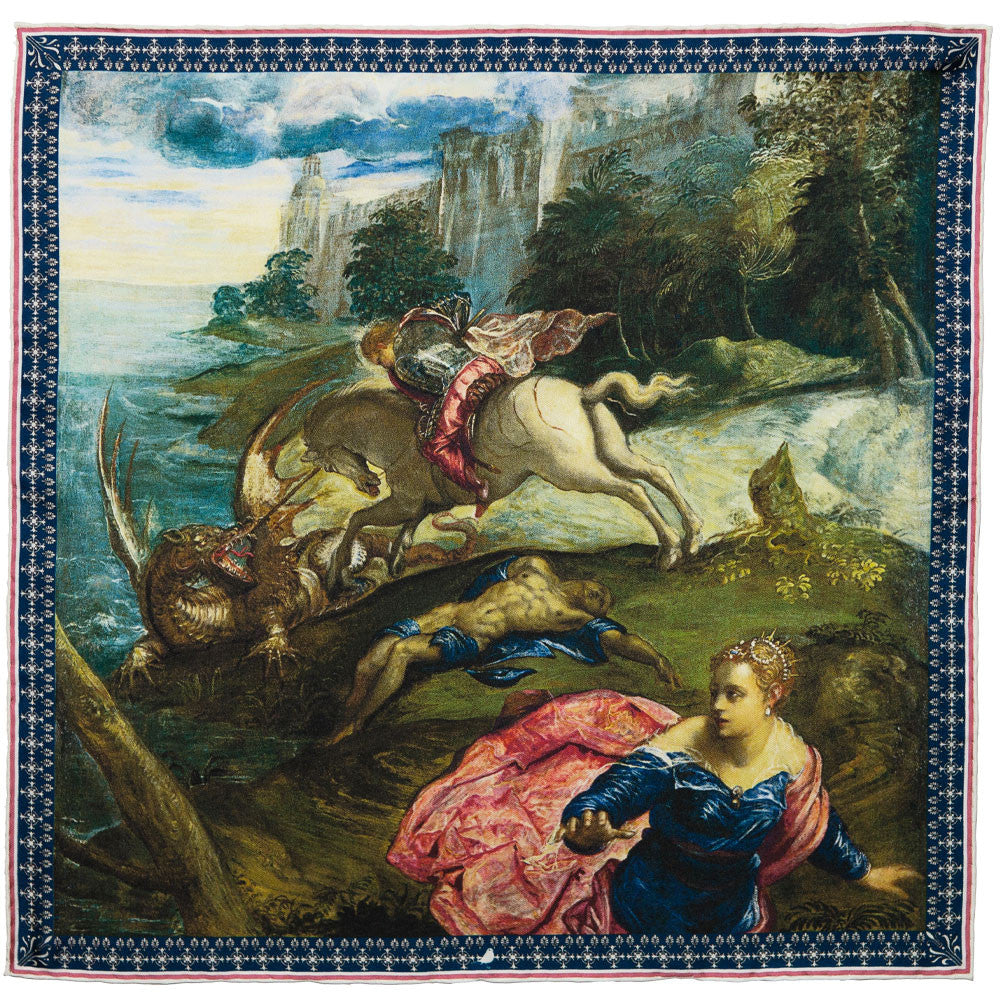
For a more specific choice, the Jockey Club collection is worth knowing about. The Sceptre at Newmarket depicts the champion filly who won the race in 1901 and again in 1902 in record time. The Sandown Park Lawn, 1884 shows the historic course in its Victorian prime. Both are made to the same standard as the rest of the collection and happen, in this case, to make the subject matter entirely appropriate to the occasion.
The Winter Meeting
What to Wear to Cheltenham Festival and Autumn Race Meetings
The winter meeting is a different proposition entirely. Where Ascot in June asks for lightness, Cheltenham in March asks for weight, warmth, and cloth that improves in cold and grey rather than wilting in it. This is the natural home of English tweed.
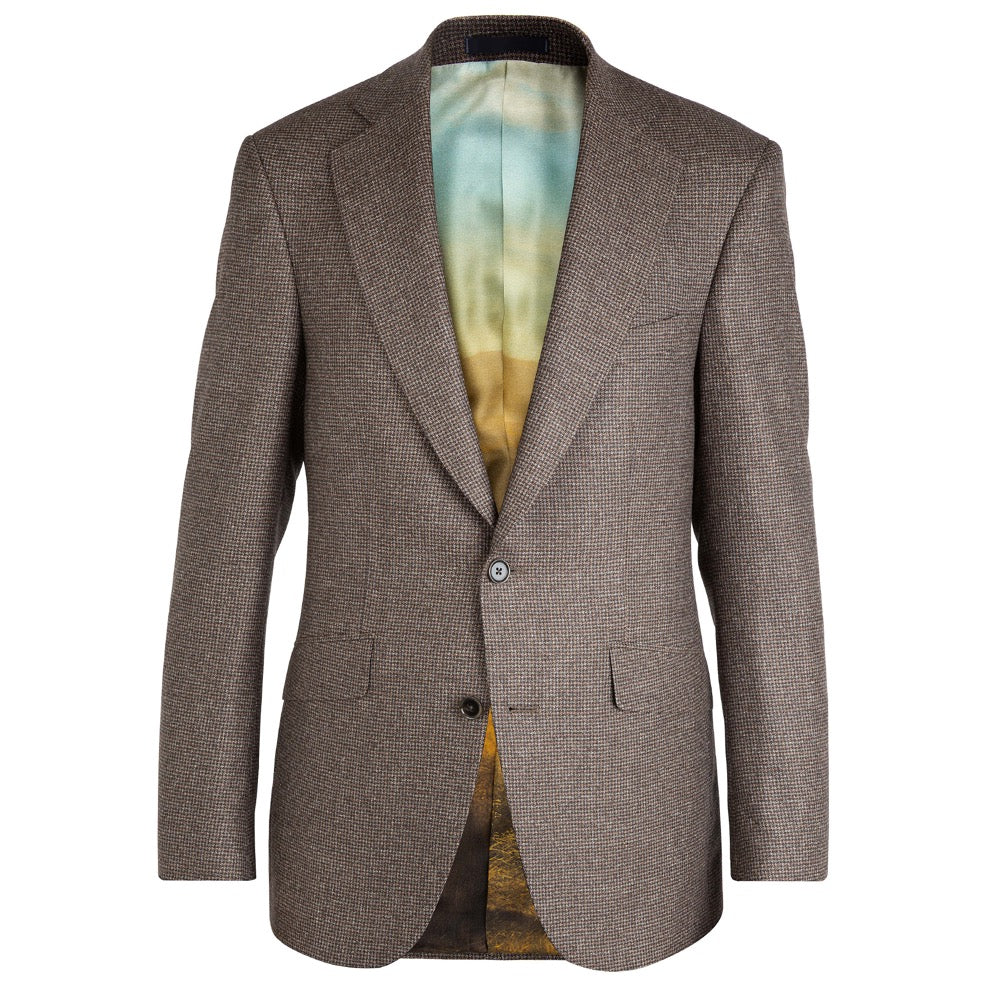
A well-cut tweed or herringbone wool jacket in the brown and biscuit range sits naturally against a winter landscape in a way that a summer linen simply does not. It keeps you warm without announcing effort. It suits the setting without requiring explanation. Pair it with a thick wool tie, a warm madder silk pocket square, and good leather shoes in brown grain or suede, and the outfit has understood where it is going.
An overcoat earns its place more at Cheltenham than almost anywhere else. A camel or tobacco wool overcoat worn over a tweed jacket and grey flannel trousers contrasts rather than coordinates: the outfit reads as deliberately layered rather than accidentally uniform. The colour shows off construction details that can disappear against a dark navy or charcoal. If you are looking for one, browse the overcoats collection before the autumn fixtures start.
Explore the Collection
Ties and Pocket Squares for the Races



Frequently Asked Questions
What to Wear to the Races: Your Questions Answered
What is the dress code for Royal Ascot?
The Royal Enclosure at Royal Ascot requires morning dress for men: top hat, tailcoat, waistcoat, and tie. A waistcoat is mandatory, and the tie must be worn with a collared shirt. The Village Enclosure and Queen Anne Enclosure have a Smart Casual requirement, which in practice means a jacket and tie. No jeans, trainers, or open-toed shoes in any of the formal enclosures. If you are dressing for the Royal Enclosure, a well-chosen tie and pocket square are where the real difference is made: two men in identical morning dress will look entirely different depending on what they put in their top pocket.
What jacket should I wear to Glorious Goodwood or a summer race meeting?
A linen jacket in a warm tone, tobacco, biscuit, or sand, is the best choice for a summer race meeting. It breathes well, handles a long outdoor day comfortably, and carries a relaxed elegance that suits the country setting. A herringbone weave adds visual interest without looking overworked. Avoid heavily structured jackets: the occasion calls for something that moves with you across the course of the day. Pair with a plain or lightly striped shirt, mid-grey or stone wool trousers, and brown leather shoes.
What tie should I wear to the races?
A textured tie is almost always the better choice over a flat printed silk at the races. Knitted wool-cashmere ties in racing green, midnight blue, or burgundy pair naturally with the textured cloths that race day dressing calls for. A shantung stripe in colours that complement rather than lead the outfit works on the same principle: silk with enough body and surface interest to sit comfortably alongside linen or herringbone. The goal is a tie that finishes the picture rather than dominating it.
What pocket square should I wear to Royal Ascot or the summer races?
A madder silk pocket square in an earthy tone, racing green and bronze, burnt orange, warm ochre, sits naturally with the linen and herringbone cloths summer racing calls for. Its matte finish complements rough textures in a way that a glossier printed silk does not always manage. A white linen pocket square in a flat fold is the conservative alternative and is essentially impossible to get wrong at any meeting. For something tied to the occasion itself, the Jockey Club collection pocket squares, Sceptre at Newmarket and Sandown Park Lawn 1884, combine appropriate subject matter with the right quality of silk.
Can I wear a suit to the races?
A well-cut suit in the right cloth works well at the races. A Prince of Wales check, a subtle herringbone, a heavier flannel: these read appropriately in a country setting. The suit that tends to look out of place is the slim-cut, urban business suit in a synthetic blend. It belongs in an office. At a racecourse, in a paddock, against the landscape, it reads as a man who has dressed for a different occasion. If you want to wear a suit, choose cloth with natural texture and weight, and support it with accessories that acknowledge the outdoor country register.
What to wear to Cheltenham Festival?
Cheltenham in March requires warm, substantial dressing. A herringbone or check tweed jacket in earthy tones, paired with thick wool trousers and good leather shoes in brown grain or suede, is the classic approach and the one that will always look right at the course. A knitted tie and a madder silk pocket square tie the palette together. An overcoat is worth bringing: a camel or warm wool version keeps you comfortable through a long outdoor day and sits well over the darker tones of a tweed jacket below it. Cheltenham rewards the man who has thought about the setting.
To view the full collection click on the button below.