

Is Investing in Handmade Ties Worth It?
Every tie begins as a length of cloth. What happens between that and the finished object sitting around your collar is either something mechanical or something else entirely. The word "handmade" has been stretched considerably in recent years. Here is what it actually means, why the construction determines almost everything about how a tie performs, and whether the difference is worth paying for.
Shop the Video
 Bronze Shantung Silk Tie £155
  Blue, Cream & Ecru Stripe Shantung Silk Tie £155
  Burgundy & Navy Medallion Madder Silk Tie £155
  Navy, Bronze & Green Repeat Madder Silk Tie £155
  Burnt Yellow & Blue Floral Repeat Silk Tie £155
  Bordeaux & Pearl Puppytooth Silk Twill Tie £155
  Burgundy & Blue Micro Dot Grenadine Tie £195
 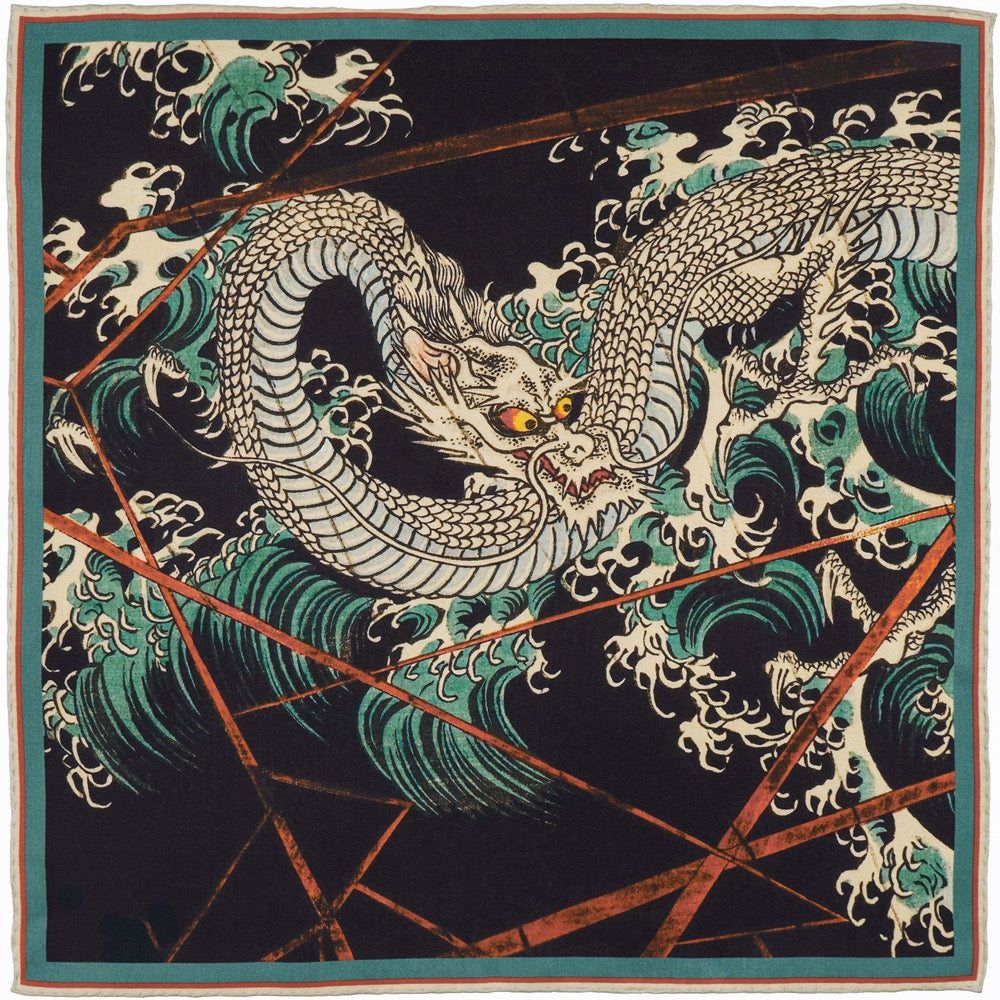 A White Dragon Ascends Pocket Square £90
  Pink Superfine Merino Wool Jacket £1,445
  Ivory, Crimson & Blue Madder Silk Pocket Square £90
  Navy Shantung Silk Tie £155
For more styling tutorials subscribe to our channel
Subscribe to Our ChannelThe Shape Difference
What Makes a Handmade Tie Look Different From a Machine-Made One
The thing you notice first is the knot. Not the fabric, not the colour, not the label inside. The knot.
A handmade tie knots differently. The blade rounds slightly when folded; the edges curve rather than crease flat. The resulting knot has depth, a small three-dimensional swell, that no machine-pressed tie reliably produces. This is not a subtle distinction. Hold both against each other and it becomes apparent immediately, in the way that the difference between a cooked meal and a reheated one becomes apparent immediately: not loudly, but with total conviction.
Machine-pressed ties are flattened in production. The interlining is pressed into position, the edges are held flat, and the result is a tie that reads as correct on a rack and approximate around a collar. A handmade tie is constructed without that pressing. The silk is folded and stitched without being compressed, and the fabric retains its natural movement. The cloth, to put it simply, is allowed to remain itself.
The blade rounds slightly. The edges curve rather than crease. The knot has a depth that no machine reliably produces: quiet, three-dimensional, and entirely its own.
How It Is Made
How a Handmade Tie Is Constructed: The Process Explained
The word "handmade" means something specific here: a single artisan takes the cloth through every stage of production, from the first fold to the final slip stitch, without passing it to a machine or a second pair of hands. One person, one tie, beginning to end. This is what separates genuine handmade construction from the various creative uses of the word you will encounter elsewhere.
The outer silk is cut on the bias, at 45 degrees to the grain, which allows the fabric to stretch fractionally when knotted and recover when released. The interlining is selected separately, according to the weight and character of the cloth. The silk is then folded around it by hand, pinched and held, and the whole thing is stitched with a slip stitch: a long, deliberately loose catch that runs along the back of the blade. This allows the silk to move when knotted without distorting the structure.
That slip stitch is one of the clearest signs of genuine handmade construction. Pull the blade gently at the back and you will see it: a loose loop of thread, not pulled tight. On machine-made ties the back seam is sewn closed. On a handmade tie, it breathes. The bar tack at the wide end, the loop on the back of the narrow blade, the keeper: all stitched by hand, all invisible in wear, all consequential in the long run.
Inside the Construction
Why the Interlining Determines the Quality of Your Knot
Most owners of handmade ties have never thought about the interlining. This is entirely reasonable, because the whole point of good construction is that the customer notices only the result. But the interlining is the part that does most of the work, and understanding it makes the result easier to appreciate.
The interlining is a length of wool, typically, cut on the bias and folded inside the silk. It determines how the tie knots, how the knot holds its shape through a long day, and whether the tie recovers to its original form after being unknotted. Pure wool on the bias is the standard for good reason: it stretches fractionally when the tie is knotted, allowing the outer silk to do the same without distorting, then contracts when the knot is released, pulling the fabric gently back into shape. The tie remembers itself.
Selecting the right interlining for a given cloth is a skill. A grenadine tie requires something different from a fine printed silk. A cashmere tie demands particular consideration, because the outer cloth is expensive and any error in the interlining will compound through every wearing. Sometimes a double layer of wool is used to create the right fullness and the right knot weight. The customer never sees any of this. The knot shows it.
The dimple, that small depression just below the knot, is also a product of the interlining. A new handmade tie will not always produce a deep dimple immediately; the wool needs one or two wearings to soften into the shape of your particular knot. By the third wearing it arrives reliably. By the tenth, without effort. This is a quality that develops with use rather than arriving all at once, which is rather the point of owning something well made.
Tipped or Untipped
Tipped vs. Untipped Ties: What the Difference Means and Which to Choose
A self-tipped tie has a lining inside each blade: a folded piece of the outer fabric that gives the wide and narrow ends a clean, finished interior. This is the standard finish for most handmade ties and the right choice for printed silks, where the focus is the surface pattern. The tipping supports the blade without drawing attention to itself, which is precisely what it should do.
An untipped tie has no such lining. The edges of the blades are folded and stitched directly, which means the hand stitching becomes visible along the front edge. A faint, deliberate irregularity announces, to those who notice such things, that the tie was made by a person. It suits texture cloths particularly well; grenadines in particular, where the irregular weave and the visible stitching exist in a kind of quiet sympathy with each other.
On a fine printed silk, an untipped finish competes with the pattern. On a grenadine, it enhances the character of the cloth. The choice is not about quality: both constructions are equally well-made. It is about which fabric you are working with and how visible you want the making to be.
Three, Five, or Seven
Three-Fold, Five-Fold, Seven-Fold Ties: Does the Number of Folds Matter?
A standard handmade tie uses three-fold construction: the outer silk is folded three times around a wool interlining, which provides the structure and the knot. This is the most common approach, and when well-executed it produces results that are entirely sufficient for any occasion. The three-fold is the baseline against which the others should be measured.
Fivefold and sevenfold ties reduce or eliminate the interlining and replace it with additional folds of the outer silk. The fabric itself creates the structure. This requires considerably more cloth; in a cashmere tie, where the material is expensive, a sevenfold construction becomes a significant investment. The tie handles differently as a result: slightly softer, with a quality that comes from the weight of silk against silk rather than silk against wool.
Whether a sevenfold tie is better than a three-fold depends on what you mean by better. The sevenfold is more visible in its making; it declares itself. It is, to use a phrase from the video, aggressively handmade. If that appeals, and it appeals to a specific kind of wearer, the construction justifies it. If you would prefer the fabric to speak and the construction to support it quietly, a well-made three-fold does that with equal skill.
Choosing Your Cloth
The Best Fabrics for a Handmade Tie: Shantung Silk, Grenadine, and Madder
Good fabrics and handmade construction tend to find each other for a practical reason: if you are going to take the time to build something by hand, it makes little sense to do so with a cloth that will not reward the effort. The fabrics worth choosing each have their own argument.
Shantung is woven with thicker yarns that create irregular surface ridges, known as slubs, running through the fabric. These catch the light differently at different angles, giving the cloth a depth that a smooth twill cannot produce. A shantung tie in navy reads as something genuinely different from a smooth navy silk: the same colour, but not the same object. It has a dry, almost papery handle in the hand, and a slight give when knotted that contributes well to the knot's fullness. Our shantung silk tie collection is woven in northern Italy, where the tradition for this particular cloth has continued for several centuries.
Grenadine is woven in a honeycomb or leno structure that creates a latticed surface with its own light and shadow. The texture is significant, the weave is complex, and the cloth is produced by a small number of specialist mills. It knots well, holds the dimple reliably, and works particularly well in strong, classic colours: navy, burgundy, forest green. The weave carries the visual interest that a plainer silk would leave to the pattern.
Ancient Madder is a different order of interest. Madder silk begins as a plain twill treated with gum arabic before printing, which gives the surface a characteristic matte, chalk-like handle quite unlike conventional silk. The dyeing process, which uses screen-printing techniques dating back centuries, produces colours of particular depth: burgundy that reads differently in different lights, navy with warmth in it, green that contains other greens within it. Our Madder silk tie collection is screen-printed by our Macclesfield printers, a process that has changed very little in the past century.
All three fabrics perform considerably better in handmade construction than machine-pressed. A machine press flattens shantung and removes the surface texture that distinguishes it. It compresses the grenadine weave and reduces the play of light. Madder, pressed, loses the soft drape that gives it its particular quality of movement. Handmade construction, by allowing the cloth to retain its natural behaviour, keeps all of that intact.
Looking After Your Tie
How to Care for a Handmade Silk Tie: Storage, Cleaning, and What to Avoid
The care instructions for a handmade tie are almost entirely about what to avoid, which makes them easier to follow once you know them.
An iron should never touch a handmade tie. Ironing flattens the fabric permanently, pressing out the edge curve and the blade's natural fullness. This is precisely the quality the construction is designed to produce, and ironing removes it irreversibly.
Dry cleaners, as a category, return ties pressed flat. This achieves the same result as ironing without requiring you to do it yourself. There are dry cleaners who understand neckwear; most do not. The safest position is to avoid sending ties to them altogether.
When unknotting, reverse the tying process. Work the knot loose, return the wide end through the half-Windsor or four-in-hand, and allow the fabric to spring back gently. Pulling the knot free stresses the silk at the fold point and, over many wearings, will distort the blade.
After wearing, roll and rest. Ease out any creases gently while the fabric is still warm from the body, then roll the tie loosely from the narrow end and leave it in a drawer. This allows the wool interlining to recover its shape overnight. If a crease persists, light steam held at some distance from the fabric will coax it out. Hold the steam away from the surface rather than pressing it on: the goal is to encourage the fibres to relax, not to flatten them further.
Do not hang knitted ties. The loose weave will stretch with gravity over time, and the characteristic shape at the wide end will lose its definition. For woven silk, hanging is acceptable for short periods, though a drawer is preferable for long-term storage.
On the dimple: if a new tie does not produce a deep dimple immediately, this is expected. Give it three wearings. The interlining will soften into the shape of your knot and the dimple will arrive, naturally and reliably, with time.
The Investment Case
Are Handmade Ties Worth the Price?
The short answer is yes, with a qualifier that the better question is slightly different.
A handmade tie costs more because it takes longer to make and is built from better materials; the two things are connected, because nobody installs a poor interlining into something constructed by hand. That premium buys you a knot that performs correctly, a fabric that retains its character rather than being pressed flat out of it, and an object that improves with wearing rather than declining toward replacement.
The subtler answer is that owning handmade ties changes how you think about the category. Fewer, better, properly maintained: this is a different relationship with the wardrobe than a drawer full of things bought on sale and never quite committed to. The tie becomes worth knowing, how it knots on a particular collar, how the dimple develops over time, how the fabric behaves differently across the seasons. That knowledge accumulates quietly, and it is a form of attention that tends to be returned.
For those new to handmade ties, the entry point is less daunting than it might appear. Even a high-street suit is improved by a well-made tie, well tied. The tie does not need to match the suit's provenance to earn its place. It simply needs to be good. The knot will tell you whether it is.
Frequently Asked Questions
Your Questions on Handmade Ties Answered
What is the difference between a handmade tie and a machine-made tie?
A handmade tie is constructed entirely by a single artisan, from cutting the silk on the bias to the final slip stitch. The fabric is never pressed flat during construction, which allows the blade to retain a natural curve and the knot to have three-dimensional depth. Machine-made ties are pressed during production, which flattens the edges and removes much of the textile's natural character. The difference is most visible in how the knot sits on the collar.
Are handmade silk ties worth the price?
Yes, for anyone who cares about how a tie knots and how it wears over time. The price reflects the labour involved and the quality of materials that handmade construction makes logical to use. The knot is better, the fabric retains its character, and the tie improves with wearing rather than declining toward replacement. Buying fewer ties and buying better is the more considered position over the long run.
What is a three-fold tie, and is it better than a seven-fold?
A three-fold tie uses a wool interlining and folds the outer silk three times around it to create the structure. A seven-fold tie uses little or no interlining, replacing it with additional folds of the outer fabric, which requires significantly more cloth and produces a softer handle. Neither is objectively superior: a well-made three-fold tie knots beautifully. The seven-fold is more visible in its making and appeals to wearers for whom the construction itself is part of the object's interest.
What is an untipped tie?
An untipped tie has no self-lining inside the blades. Rather than the outer fabric folding back to line the blade interior, the edges are folded and stitched directly, leaving the hand stitching visible along the front edge. It signals the making openly and suits texture cloths like grenadine particularly well. On a fine printed silk, a self-tipped finish gives a cleaner result, keeping the attention on the pattern rather than the construction.
How do I care for a handmade silk tie?
Unknot by reversing the tying process rather than pulling the knot free. After wearing, ease out any creases gently while the fabric is still warm, roll the tie loosely, and rest it in a drawer overnight. Avoid ironing, which flattens the blade permanently, and avoid dry cleaners who press neckwear flat. Light steam held at a distance will address persistent creases. The wool interlining recovers its shape with rest, which is the most important care habit of all.
What is grenadine silk and why is it used for handmade ties?
Grenadine is a woven silk with a latticed honeycomb structure that creates a textured surface with depth and light. It is produced by a small number of specialist mills and tends to cost more than plain silk twill. Grenadine knots well, holds a dimple reliably, and works particularly well in strong, classic colours where the weave itself carries the visual interest. It is one of the most satisfying cloths for handmade construction and one of the most versatile to wear. Explore the full handmade tie collection to see it alongside our shantung and Madder silk options.
Every tie in our collection is handmade in England and Italy, by craftsmen who have spent decades in their specific disciplines.
To view the full collection click on the button below.