

How to Look Slimmer in Tailoring
Fit is the whole argument in tailoring. Get it right and everything else follows. This post covers the adjustments that make the biggest difference, from trousers to jacket shape to cloth and colour, for anyone who wants their clothes to work a little harder for them. Most of the answers are simpler than you might expect, and none of them require losing a single pound.
Shop the Video
 Light-Grey Hopsack Wool Blend Jacket
£[PRICE — please confirm]
Light-Grey Hopsack Wool Blend Jacket
£[PRICE — please confirm]
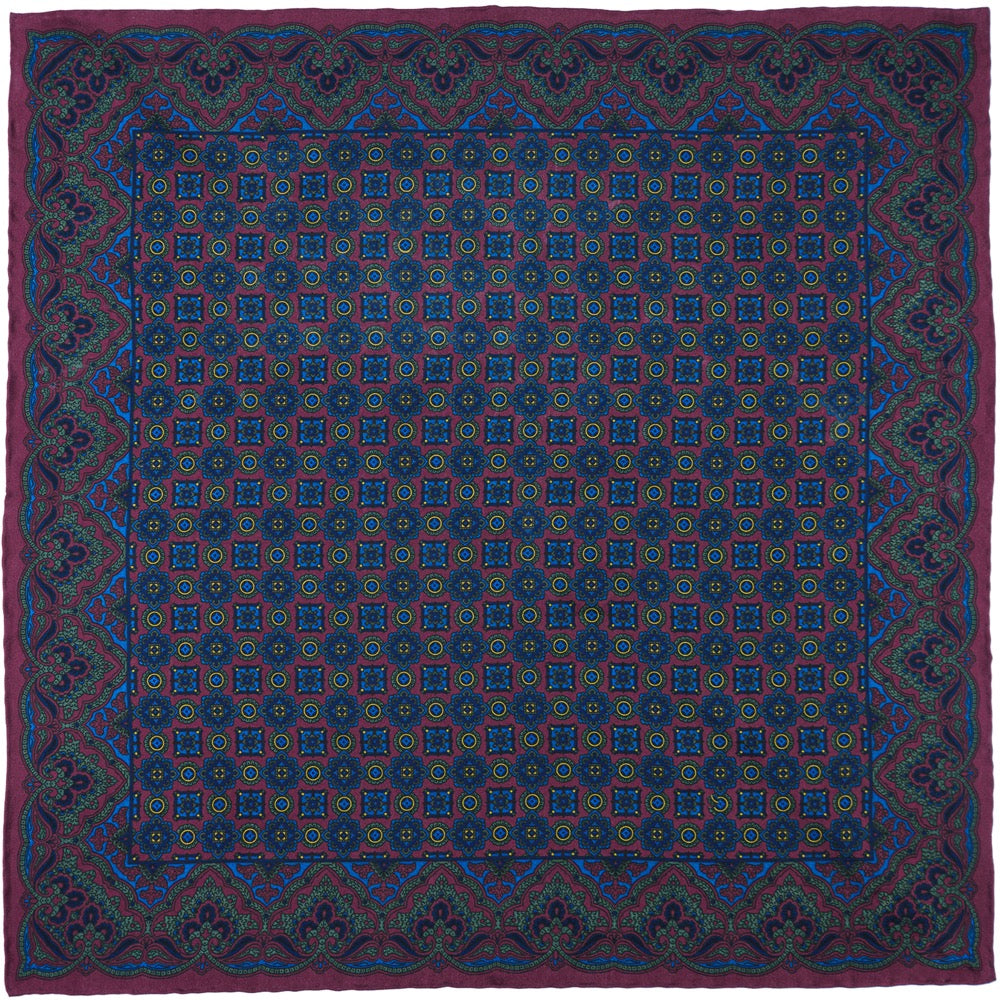 Ruby, Green & Blue Madder Silk Pocket Square
£[PRICE — please confirm]
Ruby, Green & Blue Madder Silk Pocket Square
£[PRICE — please confirm]
 Bordeaux & Pearl Puppytooth Silk Twill Tie
£[PRICE — please confirm]
Bordeaux & Pearl Puppytooth Silk Twill Tie
£[PRICE — please confirm]
 Dark-Blue Hopsack Wool Jacket
£[PRICE — please confirm]
Dark-Blue Hopsack Wool Jacket
£[PRICE — please confirm]
 La Grenouillère by Monet Pocket Square
£[PRICE — please confirm]
La Grenouillère by Monet Pocket Square
£[PRICE — please confirm]
For more styling tutorials, subscribe to our channel
Subscribe to Our ChannelWhere to begin
Why Fit Is the Foundation of Every Good Outfit
Ready-to-wear is designed around a single set of proportions. It is a reasonable assumption for the industry to make, and it works well for some men and less well for others. For anyone who carries a little more weight around the middle, which is most of us at some point, the block pattern tends to add fabric in every direction without adjusting the details that actually govern how a garment looks: lapel width, collar depth, jacket length. The result is more cloth but not more flattery.
Understanding this takes the pressure off. The clothes are not failing because of anything about you. They are failing because they were made to a different specification. The good news is that tailoring has always had the tools to correct this, and they are more accessible than most people realise.
The other thing worth knowing is that the ready-to-wear industry has a further assumption built in: that a larger chest means a taller and broader man across the shoulders. This is frequently not the case. Sleeves end up too long. Shoulder seams slip. The jacket, technically the right size around the chest, looks borrowed everywhere else. An alterations tailor corrects this quickly and inexpensively, and for anyone buying tailoring in larger sizes, building that relationship is one of the most useful things you can do.
The single biggest difference
Why High-Waisted Trousers Are Worth Trying
Of all the adjustments available, this one tends to have the most immediate effect. Trousers cut to sit on the natural waist, above the stomach rather than below it, hang vertically and hold their position through the day. Worn with braces, which is what they are designed for, they are more comfortable than a belt on a fitted waistband and considerably more elegant.
The size on the label goes up. That is genuinely unimportant. What changes is that the shirt stays tucked, the jacket hangs correctly, and the whole outfit settles into the shape it was supposed to have. A well-cut jacket over a properly-hung trouser is the most flattering combination available. It is also one of the most comfortable ways to dress.
Braces are worth a word of their own. They have an unfair reputation for formality, but they are simply the most practical way to hold a trouser at the correct height without a waistband cutting in. Clip braces work for everyday wear. Button braces, attached to buttons sewn inside the waistband, are the correct approach for tailored trousers and suit trousers. The difference in how the trouser hangs is visible. If you have not worn braces before, give them a week. Most men who try them do not go back.
Shape and proportion
What Good Jacket Fit Looks Like on a Larger Frame
A shaped jacket, one with a little suppression at the waist, works better on a larger frame than a straight box cut. The box cut adds volume in every direction. A shaped jacket creates a line. The difference, once you see it, is considerable.
There is also the question of what happens at the back. When a jacket is sized up to fit a larger chest, the back and sides often carry more fabric than the body needs. A made-to-measure or made-to-order jacket can be cut with more room at the front and a cleaner line at the sides, which is a significantly more flattering result than the ready-to-wear approach of simply adding fabric uniformly. For anyone who has put on a larger jacket and felt that the back somehow looked wrong even when the front fitted, this is the reason.
Jacket length is worth paying attention to. The correct length covers the seat without going further. Going longer shortens the leg and adds weight to the overall silhouette. When buying off the peg, an alterations tailor can take care of both length and any excess fabric at the back and sides. At a chest size of 46 inches or above, a made-to-order jacket is worth exploring seriously. Ready-to-wear at that size is rarely scaled with the correct proportions, and the alterations required to correct it can cost nearly as much as getting something made right from the start.
Cloth and colour
The Fabrics and Colours That Work Hardest in a Suit
Travel suiting cloth is one of the best choices for anyone who wants to look well through a long day. It breathes, drapes cleanly, holds its shape and resists creasing. The matte surface absorbs light rather than reflecting it, which helps create the clean, uninterrupted line that good tailoring is always working toward. It is also, practically speaking, one of the most comfortable cloths to wear for extended periods.
Linen is best left for occasions where the relaxed look is part of the point. It creases quickly and particularly, in a way that can work against the rest of the effort you have put in. For a summer wedding or a long day in the office where looking well matters from morning to evening, a travel cloth or a lightweight wool is the more reliable choice.
Heavier, shinier cloths are worth approaching with the same caution. Cloth that catches the light tends to emphasise contour. A matte flannel or a well-woven worsted in a mid to dark shade will always perform better in this context than a shiny polyester blend or a cloth with a pronounced sheen.
Dark colours in a suit are reliably slimming. Where they work best is when the shirt follows suit in tone. A dark jacket over a white shirt worn open at the collar creates a strong contrast between lapels that draws the eye to the middle of the outfit. A darker shirt, navy, slate or stone, sits closer in tone to the jacket and lets the eye travel through the outfit naturally rather than stopping at the waist.
The details that do most work
Ties, Pocket Squares and a Waistcoat: the Proportion Argument
A single-breasted waistcoat is one of the most useful garments in this context. It covers the midriff cleanly, keeps the shirt in order and creates a long vertical line through the centre of the outfit. In a three-piece where the jacket comes off during the day, it holds the shape that the jacket was providing. It is underused by almost everyone who would benefit from it.
Colour matters here. A dark waistcoat in the same family as the suit, or slightly darker, works with the outfit rather than interrupting it. A very pale or contrasting waistcoat can do the opposite, drawing the eye to the centre of the body rather than letting it move through the outfit unobstructed.
Tie width and lapel width should work together, and both should be proportionate to the frame wearing them. A tie with some weight and texture to it balances a broader chest well. When fashion moves toward very narrow proportions, a slightly wider tie and lapel will always look more considered on a larger frame than following the trend all the way.
A pocket square draws the eye upward to the chest, which is exactly where you want it. A well-chosen square in a cloth worth looking at is a small addition that earns its place in any outfit, and on a larger frame the directional benefit is real.
Shirts and everyday wear
Dress Shirts and Casual Clothes: Getting the Fit Right
With dress shirts, the collar size is the anchor. Find the collar that fits your neck comfortably and buy a classic fit at that size. If the body of the shirt is still generous, an alterations tailor can bring in the side seams and shorten the length quickly and inexpensively. The result is a shirt that sits flat under a jacket and stays tucked through the day.
Ready-to-wear sizing tends to assume that a larger collar means a taller and broader frame across the shoulders. That is not always the case, and an alterations tailor is the straightforward solution. Sleeves often need shortening. Shoulders can be taken in slightly. These are small adjustments that transform how a garment wears.
It is also worth resisting the instinct to buy a slim-fit shirt in a larger collar size on the basis that the slim cut will compensate for the extra room needed. It rarely does. What you tend to get is a very large collar on a shirt that still pulls across the body and bags at the sides. The collar is the most visible part of a shirt and it should fit the neck it is attached to. Everything else can be adjusted from there.
For casual clothes, the same principles apply in a more relaxed register. Nothing clingy, nothing oversized, nothing with a sheen that catches the light. A well-fitting polo in a matte cotton, a shirt that sits properly at the collar, a jacket worn over dark trousers at the waist: the rules are consistent and they are not complicated. The casual wardrobe rewards the same attention to fit as the formal one, and repays it in the same way.
The broader point
Confidence Comes From Clothes That Fit
Well-fitted clothes feel comfortable. Comfortable clothes produce confidence. The relationship is as direct as that, and it has very little to do with size. The man who is comfortable in what he is wearing stops thinking about his clothes the moment he puts them on. That is the whole point of dressing well. It is entirely available, at any size, to anyone who knows where to look.
The adjustments covered here are not complicated or expensive. A higher trouser with braces. A shaped jacket of the right length. A cloth that drapes rather than clings. A shirt altered to fit the body actually wearing it rather than the body the manufacturer imagined. A tie that balances the chest it sits against. Taken together, they add up to a considerably more flattering result than any single change would suggest. And none of them require changing anything about yourself. They only require knowing what to ask for.
Shop the Look
 Dark-Brown Hopsack Wool Blend Jacket
£[PRICE — please confirm]
Dark-Brown Hopsack Wool Blend Jacket
£[PRICE — please confirm]
 Midnight Blue Knitted Wool-Cashmere Blend Tie
£[PRICE — please confirm]
Midnight Blue Knitted Wool-Cashmere Blend Tie
£[PRICE — please confirm]
 Chestnut-Brown Hopsack Wool Blend Jacket
£[PRICE — please confirm]
Chestnut-Brown Hopsack Wool Blend Jacket
£[PRICE — please confirm]
 Heathered Oxblood & Ivory Stripe Silk Blend Tie
£[PRICE — please confirm]
Heathered Oxblood & Ivory Stripe Silk Blend Tie
£[PRICE — please confirm]
 Camel Wool Overcoat
£[PRICE — please confirm]
Camel Wool Overcoat
£[PRICE — please confirm]
 Manocchi Pink & Yellow Ochre Rosette Pocket Square
£[PRICE — please confirm]
Manocchi Pink & Yellow Ochre Rosette Pocket Square
£[PRICE — please confirm]
Frequently Asked Questions
Your Questions Answered
Do high-waisted trousers actually make you look slimmer?
Yes, and the effect is more significant than most men expect. Trousers cut to sit on the natural waist, worn with braces, hang vertically, keep the shirt tucked and allow the jacket to sit correctly. They are also considerably more comfortable than a waistband worn lower. The size on the label goes up slightly. The improvement in how the outfit looks and feels is immediate.
What is the most flattering jacket cut for a larger frame?
A shaped jacket with some suppression at the waist is more flattering than a straight box cut, which adds volume rather than creating a line. The jacket should cover the seat without going further. At a chest size of 46 inches or above, made-to-order is worth considering: ready-to-wear at that size is rarely scaled with the right proportions, and the cost of the alterations needed to correct it can approach the cost of something made correctly from the start.
What suit fabrics work best for a larger frame?
Travel suiting cloth is a reliable choice: it breathes well, drapes cleanly, holds its shape through the day and resists creasing. A matte surface absorbs light rather than reflecting it, which helps create a clean, uninterrupted line through the outfit. Linen creases quickly and specifically in ways that can work against the rest of the effort. Shiny cloths tend to draw attention to the shape of the body beneath them.
How should a dress shirt fit if you want a slimmer silhouette?
Start with the collar size that fits the neck comfortably and buy a classic fit at that size. If the body of the shirt is still generous, an alterations tailor can take in the side seams and shorten the length quickly and inexpensively. Ready-to-wear sizing tends to assume a larger collar means a taller and broader frame, which is not always the case. Small alterations make a significant difference to how a shirt wears.
Does a waistcoat help with the silhouette?
It does, more than most people realise. A well-fitted dark single-breasted waistcoat covers the midriff, keeps the shirt in place and creates a clean vertical line through the outfit. It is particularly useful when the jacket comes off during the day, since it maintains the shape the jacket was providing. Single-breasted works better here than double-breasted, which adds layers of fabric to the front rather than containing them.
What tie width works best on a larger frame?
The tie blade should balance the lapel, and both should be proportionate to the frame wearing them. A slightly wider tie on a broader chest looks considered and correct. When fashion trends toward very slim proportions, holding to a slightly wider tie and lapel will always read as more intentional on a larger frame than following the trend all the way.
To view the full tailored jackets collection, click on the button below.